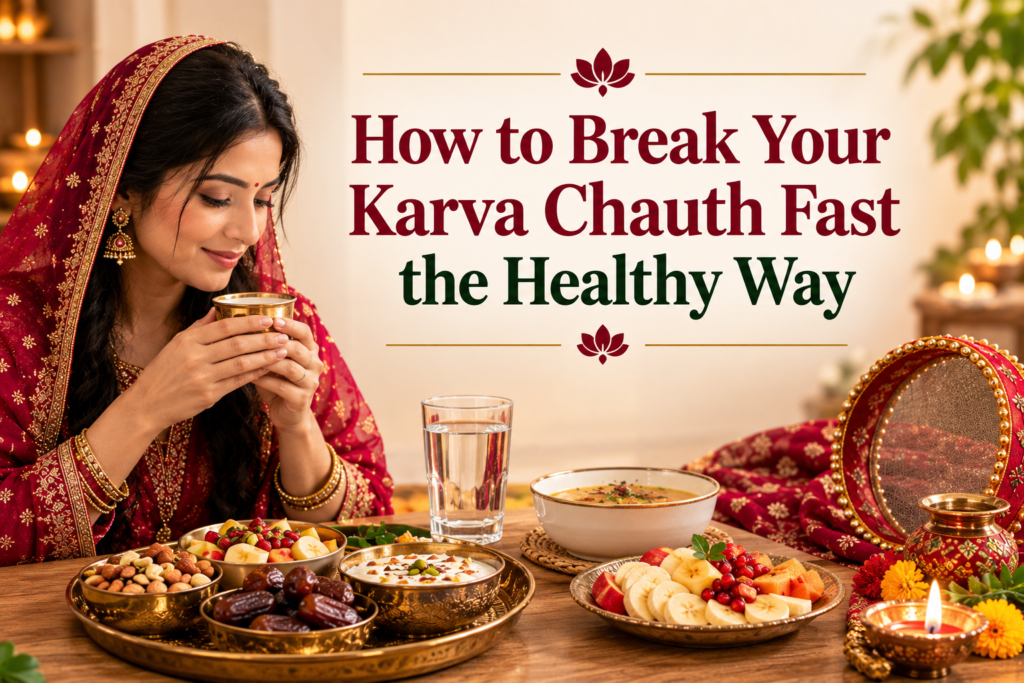
How to Break Your Karva Chauth Fast the Healthy Way
The Quick Answer
To break your Karva Chauth fast the healthy way, start with small sips of water, then a single sweet or a piece of fruit, wait 15 to 20 minutes, and only then sit down to a light, balanced meal. Rehydrate first, eat slowly, and save the rich food and second helpings for later in the evening.
It sounds obvious. Yet after eleven hours without food or water, most of us do the exact opposite. The moon appears over Slough at around 6:22pm on Thursday 29 October 2026, the sieve goes down, and within ten minutes there’s a plate piled high with puris, paneer and gulab jamun.
Nobody is saying skip the feast. Karva Chauth is a celebration, and the food is a big part of the joy. This guide is about pacing it so you feel good afterwards, sleep well, and wake up on Friday ready for work rather than nursing a heavy stomach and a headache.
Why the First Hour After Moonrise Matters
By the time the moon rises, your body has been running on your sargi for well over twelve hours. If you kept a nirjala fast, you’ll also be mildly dehydrated, which is why so many women feel tired, light headed or headachy by late afternoon.
Your digestive system has been resting all day too. Throw a large, oily, spicy meal at it in one go and it tends to protest. Bloating, acidity, heartburn and that uncomfortable overfull feeling are all common on Karva Chauth night, and almost always come from eating too much, too fast.
Blood sugar is the other piece of the puzzle. After a long fast, a big hit of sugar and refined flour causes a sharp spike followed by a slump, leaving you sleepy and strangely hungry again an hour later.
The fix is simple: give your body a gentle runway. Fluids first, a little natural sugar second, a proper meal third. It takes about half an hour from start to finish, which is roughly the time it takes everyone to finish photos on the doorstep anyway.
Step by Step: From the First Sip to Dinner
Here’s a simple sequence that respects tradition and keeps your stomach happy.
- The ritual sip. After you’ve looked at the moon and your husband through the sieve, he offers you water from the karva or a glass. Take small sips rather than gulping. Around 150ml is enough to start.
- The ritual sweet. Next comes the first bite of food, traditionally something sweet. A piece of mithai, a date or a little kheer is perfect. One piece is enough for now.
- A short pause, about 10 minutes. Sit down, chat, take photos and sip more water slowly. Room temperature water is kinder than ice cold after a long fast.
- Something light and hydrating. Have a small bowl of fruit, a cup of warm soup or a glass of lassi or nimbu pani. This starts gentle digestion and tops up fluids.
- Another short pause. Give it another 10 minutes while the table is laid.
- The main meal. Now sit down to dinner. Start with a modest portion, eat slowly and chew well. You can always go back for more.
- Dessert later. If there’s a box of sweets doing the rounds, enjoy one or two pieces an hour or so after dinner rather than straight after.
The whole process takes 30 to 40 minutes. It barely slows the celebration down, but it makes a real difference to how you feel by bedtime.
The Best Foods to Eat First
The first things you eat should do two jobs: put fluid back into your body and give it a little easy energy without overwhelming it.
Dates are a brilliant opener. They’re naturally sweet, full of fibre and potassium, and gentle on an empty stomach. Two or three is plenty.
Fresh fruit with a high water content works beautifully. Watermelon, oranges, pears, papaya and grapes are all good. Banana is filling and settles the stomach, which makes it handy if you feel a little queasy.
Coconut water rehydrates quickly and replaces some of the minerals you’ve lost during the day. Most supermarkets in Slough stock it in cartons, so keep a couple in the fridge.
Nimbu pani with a pinch of salt and a spoon of sugar is the old fashioned rehydration drink, and it still works. A thin, lightly salted lassi or chaas does a similar job and helps digestion too.
Warm soup is underrated on Karva Chauth. A small cup of tomato shorba, moong dal soup or vegetable broth warms you up after standing outside on a chilly October evening and prepares your stomach for the meal ahead.
Try to avoid fizzy drinks at this stage. They fill you with gas, leave you bloated and do very little for hydration.
Building a Balanced Karva Chauth Dinner
A healthy Karva Chauth dinner doesn’t mean giving up Punjabi favourites. It just means building the plate with a bit of thought.
A useful rule of thumb is to fill half your plate with vegetables and dal, a quarter with protein, and a quarter with roti or rice. Here’s how that looks with dishes most families already cook.
| Part of the plate | Good choices | Go easy on |
|---|---|---|
| Dal and vegetables (half) | Moong or masoor dal, mixed sabzi, aloo gobi, bhindi, palak | Very creamy or buttery gravies |
| Protein (a quarter) | Paneer bhurji, rajma, chole, kadhi, plain curd | Deep fried paneer pakoras |
| Grains (a quarter) | Plain roti, phulka, jeera rice, a small portion of pulao | Puris, bhature and parathas in large numbers |
| On the side | Cucumber raita, salad, a little pickle | Papad and heavily salted namkeen |
Kadhi chawal deserves a special mention. It’s light, tangy and easy to digest, and the curd base helps settle an empty stomach. No wonder it’s a Karva Chauth classic in so many Punjabi homes.
Dal makhani and shahi paneer are fine too, just in a smaller bowl alongside something lighter. And if puri chole is the family tradition, enjoy two puris rather than six. The taste is the same, and your stomach will thank you for it later.
Enjoying Sweets Sensibly
Mithai is woven into every part of Karva Chauth, and nobody should feel guilty about enjoying it. The trick is choosing well and spacing it out.
For the ritual first bite, milk and nut based sweets are kinder than syrupy ones. A small piece of kaju katli, dry fruit barfi, coconut barfi or besan ladoo gives a gentle lift without a sugar rush. Save the gulab jamun, jalebi and rasmalai for an hour after dinner, when your stomach has settled and you can actually enjoy them.
Portion size matters more than the type of sweet. One or two pieces is a treat. Five or six on an empty stomach is a recipe for a restless night.
Quality makes a difference too. Freshly made mithai with proper ghee, real nuts and good milk tastes richer, so a single piece feels satisfying. That’s why so many families head to Maharaja Sweets Slough for their festival boxes rather than settling for mass produced packs from the supermarket aisle.
If the week is already packed, you can Order Indian Sweets Online in Slough a few days before Thursday 29 October and collect when convenient. A mixed box covers the thali, the baya and the after dinner treat in one go, and it saves a frantic dash on the day.
Let Someone Else Do the Cooking
There’s a quiet irony in Karva Chauth. The woman who has fasted all day is often expected to cook a full feast the moment it ends. Standing over a hot hob at 6:30pm, still weak from hunger, is hardly the healthy option either.
Ordering in takes that pressure away. A trusted Indian Food Takeaway means dinner arrives hot, everyone sits down at the same time, and nobody misses the best part of the evening. It also makes portion control easier, since you can order exactly the balanced spread you need: a dal, a sabzi, a paneer dish, rotis and rice.
If homely flavours matter to you, the Best Punjabi Takeaway in Slough is the kind of place that cooks kadhi, dal and sabzi the way they’re made at home rather than in heavy restaurant style gravies. Order in the afternoon, as local kitchens are packed on Karva Chauth evening.
Hosting a larger katha changes the maths. Deciding between Takeaway or Catering usually comes down to guest numbers: a takeaway suits six to ten people, while twenty or more are far easier with caterers serving and clearing up. For community evenings at a hall or mandir, professional Party & Wedding Catering services can plan a lighter, balanced menu with soup, fruit and kadhi alongside the richer dishes, so every guest can break the fast sensibly.
Common Mistakes to Avoid
Even experienced fasters fall into these traps on Karva Chauth night.
Gulping a litre of water at once. It feels like the right thing after a dry day, but it often leads to bloating and nausea. Sip steadily across the evening instead, aiming for around 1.5 to 2 litres before bed.
Starting with fried food. Pakoras, samosas and puris on an empty stomach are the fastest route to acidity and heartburn. Have them later in the meal, if at all.
Eating too late and too much. A huge meal at 9pm followed by bed at 10pm makes for poor sleep. Try to finish your main meal within two hours of moonrise.
Reaching for tea straight away. A cup of chai is comforting, but caffeine on an empty, dehydrated body can bring on palpitations or a headache. Wait until after dinner.
Lying down right after eating. A gentle ten minute walk around the block, or simply sitting upright on the sofa, helps digestion far more than collapsing into bed.
One health note worth repeating: if you’re diabetic, pregnant, breastfeeding or on medication, plan how you’ll break the fast with your GP beforehand. Low blood sugar after a long fast needs proper care.
Key Takeaways
- Break the fast with small sips of water, not a full glass in one go.
- Follow the ritual sweet with a 10 minute pause before eating anything else.
- Dates, fruit, coconut water and warm soup are the gentlest first foods.
- Fill half your dinner plate with dal and vegetables, and keep puris to a couple.
- Enjoy rich sweets an hour after dinner rather than on an empty stomach.
- Ordering dinner in means the woman who fasted doesn’t have to cook.
- Finish eating within two hours of moonrise and take a short walk afterwards.
Frequently Asked Questions
What should I eat first after the Karva Chauth fast?
Start with small sips of water and the ritual sweet. After 10 minutes, have dates, fruit, soup or a light drink like coconut water before your main meal.
When can I break the Karva Chauth fast in the UK in 2026?
The fast ends after moonrise on Thursday 29 October 2026. In London and Slough, the moon is expected around 6:22pm GMT.
Is it bad to eat heavy food after Karva Chauth?
Rich food isn’t harmful in itself, but eating a lot of it quickly on an empty stomach can cause bloating, acidity and poor sleep. Eat a lighter meal first and keep rich dishes to small portions.
How much water should I drink after the fast?
Sip steadily through the evening rather than all at once. Around 1.5 to 2 litres before bed suits most adults.
Can I drink tea straight after breaking the fast?
It’s better to wait until after dinner. Caffeine on a dehydrated body can cause headaches or a racing heart.
What is a good light dinner for Karva Chauth?
Kadhi chawal, moong dal with roti, mixed sabzi and cucumber raita make a light, balanced Karva Chauth dinner.
End the Day the Way It Deserves
Karva Chauth is a day of love, patience and devotion. The way you break the fast should feel just as caring, for your body as much as your spirit.
So when the moon finally rises on Thursday evening, take your time. Sip, smile, enjoy that first sweet, and let the meal unfold slowly with the people you love around the table. The feast will still be there in twenty minutes, and you’ll enjoy it far more.
Wishing you a gentle fast and a very happy Karva Chauth from all of us in Slough.