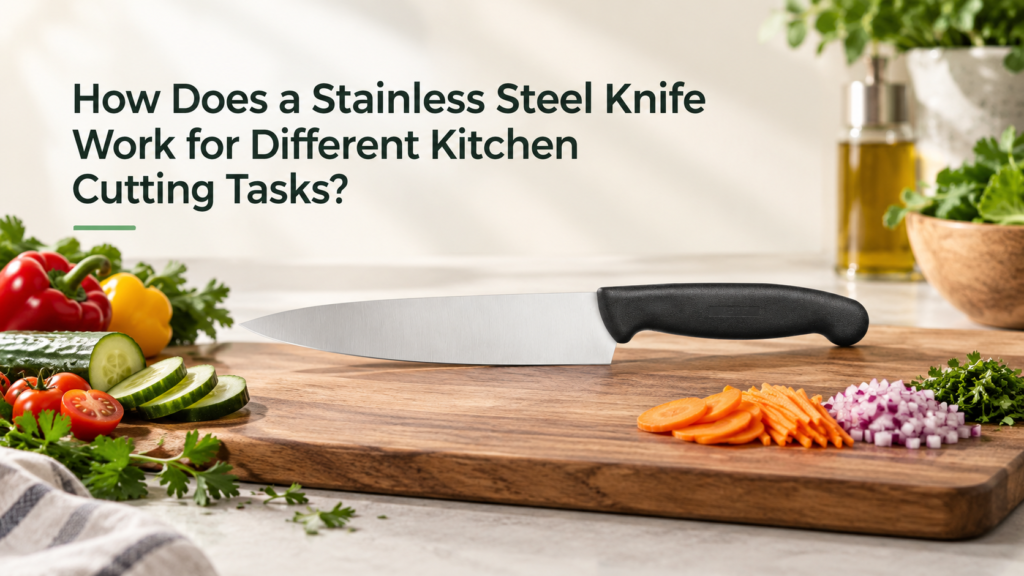
A kitchen knife is used for many everyday tasks, from slicing vegetables and chopping herbs to cutting fruits, trimming meat, and preparing ingredients for traditional Indian dishes. However, not every cutting task requires the same blade shape, sharpness, or cutting technique. Understanding how a stainless steel knife works can help home cooks, professional chefs, and food preparation workers make informed decisions about their kitchen tools.
A stainless steel knife uses a metal blade designed to provide cutting performance while offering resistance to corrosion. Its effectiveness depends on several factors, including the steel composition, blade geometry, sharpness, handle design, and maintenance routine. These factors influence how easily the knife moves through different ingredients and how much control the user has during preparation.
In Indian kitchens, where cooking may involve finely chopping onions, slicing tomatoes, cutting firm vegetables, and preparing ingredients for curries, a suitable knife can make food preparation more manageable. The same principles apply to households and food businesses in Ludhiana, where cooking requirements can vary from daily family meals to large-scale meal preparation.
For readers researching kitchen tools, including products associated with Kohe KGOC, understanding stainless steel knife functionality provides a useful starting point. Rather than selecting a knife based only on appearance or a product description, it is important to consider the intended task, blade characteristics, comfort, safety, and care requirements.
This guide explains how stainless steel knives work across different kitchen cutting tasks and what users should evaluate before choosing one.
What Is a Stainless Steel Knife?
A stainless steel knife is a cutting tool with a blade made from stainless steel, an alloy containing iron, chromium, and potentially other elements such as carbon, molybdenum, or nickel.
Chromium helps form a thin, protective oxide layer on the steel surface. This layer improves resistance to rust and corrosion, although it does not make the blade completely immune to staining or damage.
The exact composition varies by steel grade. Carbon content, heat treatment, blade hardness, and manufacturing quality can all affect sharpness retention, toughness, and ease of sharpening.
How Does the Blade Cut Food?
A knife cuts food when its sharpened edge concentrates force into a small contact area. As the blade moves through an ingredient, the edge separates its structure.
Three factors are particularly important:
- Sharpness: A sharp edge generally requires less force to cut through food.
- Blade geometry: The blade’s thickness, edge angle, and overall shape influence how it moves through ingredients.
- Cutting technique: Controlled slicing, rocking, or downward chopping can affect the result.
Stainless steel describes the blade material, not a single cutting performance level. Two knives made from different stainless steel grades may behave differently even when they look similar.
How Does a Stainless Steel Knife Work for Different Kitchen Cutting Tasks?
The knife’s shape, edge condition, and handling technique determine its suitability for particular ingredients. Understanding these differences can help users avoid unnecessary effort and reduce the risk of accidents.
1. Cutting Fruits and Soft Vegetables
A sharp kitchen knife can slice soft ingredients such as tomatoes, cucumbers, and ripe fruits without excessive downward pressure.
For tomatoes, a fine, sharp edge helps cut through the skin without crushing the flesh. A controlled slicing motion is usually more effective than pressing the blade forcefully into the ingredient.
For cucumbers and similar vegetables, a straight-edged kitchen knife can produce even slices when used with a stable cutting board.
Practical consideration: Keep the blade sharp and use a steady grip. A dull knife may slip when the user applies additional pressure.
2. Chopping Onions, Herbs, and Leafy Vegetables
Chopping involves repeated downward or rocking movements. A chef’s knife with a suitable blade profile can support this motion by allowing the user to maintain contact with the cutting board.
For onions, a stable blade helps produce pieces of a consistent size. Herbs and leafy vegetables benefit from a clean, controlled cutting motion that avoids excessive crushing.
The blade’s length, balance, and handle comfort become particularly important during repetitive preparation.
Practical consideration: Choose a knife that feels controllable in your hand rather than assuming that a heavier blade will always cut more effectively.
3. Cutting Firm Vegetables
Ingredients such as carrots, potatoes, and radishes require a knife that can handle firmer textures.
A sufficiently sharp blade with suitable geometry can move through these vegetables with controlled pressure. Blade thickness also matters because a thicker blade may create more resistance as it passes through dense ingredients.
For larger or harder vegetables, use a stable cutting board and a controlled downward motion. Do not twist the blade forcefully inside an ingredient, as this can place unnecessary stress on the edge.
Practical consideration: Match the knife to the ingredient’s firmness and size. Avoid using a delicate utility blade for tasks that exceed its intended design.
4. Slicing Meat and Poultry
A stainless steel knife can be used to slice boneless meat and poultry when its blade design suits the task. A relatively narrow blade may offer useful control for trimming and slicing, while a broader kitchen knife may be suitable for general preparation.
Clean cutting depends on sharpness, blade shape, and the direction of the cutting motion. Pulling or pushing the blade in a controlled manner can help produce more consistent slices.
However, stainless steel construction alone does not determine whether a knife is appropriate for meat preparation. The blade’s intended use and structural strength also matter.
Practical consideration: Use separate or properly cleaned equipment for raw meat and ready-to-eat foods to reduce cross-contamination. Never use an ordinary kitchen knife to cut through bones unless it is specifically designed for that purpose.
5. Preparing Ingredients for Indian Cooking
Indian cooking often combines several preparation methods, including fine chopping, thin slicing, dicing, and cutting ingredients into larger pieces.
A general-purpose stainless steel kitchen knife may handle many of these tasks, depending on its design. For example:
- Onions and tomatoes may require slicing or fine chopping.
- Potatoes and carrots may need dicing or thicker cuts.
- Green chilies and coriander require controlled, precise cutting.
- Firm ingredients may need a blade with suitable strength and geometry.
In Ludhiana, as in other parts of India, household cooking requirements can differ from those of restaurants, catering kitchens, and commercial food preparation facilities. The appropriate knife depends on the ingredients, preparation volume, and frequency of use.
Which Stainless Steel Knife Features Matter Most?
When comparing stainless steel knives, focus on the features that influence actual use rather than relying on the material name alone.
Blade Material and Construction
The stainless steel grade influences corrosion resistance, hardness, toughness, and sharpening requirements. These properties depend on the alloy composition and how the blade is manufactured and heat-treated.
If a product description does not identify the steel grade, avoid assuming that all stainless steel blades have identical characteristics.
Blade Shape and Thickness
A broad blade can help with chopping and moving cut ingredients. A narrower blade may provide more control for trimming or detailed work.
Blade thickness also affects how easily a knife passes through food. The right geometry depends on the task rather than a universal preference.
Handle Comfort and Grip
A handle should feel secure and comfortable during the intended cutting motion. Its shape, material, balance, and surface texture influence control.
A comfortable grip is particularly relevant when preparing large quantities of ingredients, as awkward handling can contribute to fatigue.
Sharpness and Ease of Maintenance
Every knife requires maintenance. Stainless steel may resist corrosion, but its cutting edge still becomes dull through repeated use.
Check whether the knife can be sharpened using an appropriate method and whether the manufacturer provides care instructions.
How Should You Maintain a Stainless Steel Knife?
Proper maintenance helps preserve cutting performance and reduces the risk of corrosion.
Follow these practices:
- Clean after use: Wash the blade with mild dishwashing liquid and water, following the manufacturer’s instructions.
- Dry thoroughly: Use a clean cloth to remove moisture, particularly around the blade and handle junction.
- Use a suitable cutting board: Wood or food-grade plastic is generally more suitable than glass, stone, or other very hard surfaces that can damage the cutting edge.
- Sharpen when needed: Use an appropriate sharpening method based on the blade and manufacturer guidance.
- Store securely: Use a knife block, blade guard, or another suitable storage method to protect the edge and prevent accidental contact.
- Inspect regularly: Look for loose handles, chips, cracks, or other damage before using the knife.
Although stainless steel offers corrosion resistance, prolonged exposure to moisture, salt, acidic food residues, or harsh cleaning conditions can still cause staining or surface damage.
How Can You Choose a Stainless Steel Knife for Your Needs?
Before purchasing a kitchen knife, consider the following questions:
- What will you cut most often? Daily vegetable preparation may require different features from meat trimming or detailed slicing.
- How frequently will you use it? Frequent use makes handle comfort, maintenance, and sharpening more important.
- Does the knife feel balanced? A suitable balance can improve control during repetitive cutting.
- Are the specifications clear? Review the blade material, dimensions, intended use, and care instructions.
- Is the knife appropriate for your skill level? A manageable size and comfortable grip can help support safer handling.
People researching stainless steel knives and kitchen tools from Kohe KGOC can apply these same criteria when reviewing available product specifications. The relevant question is whether the knife’s documented features match the user’s intended kitchen tasks.
Conclusion
A stainless steel knife works by concentrating force along a sharpened edge to separate food during cutting. Its performance across fruits, vegetables, herbs, and boneless meat depends on the blade’s geometry, steel composition, sharpness, and the user’s technique.
For households and food preparation professionals in Ludhiana, understanding these factors makes it easier to choose a knife that suits everyday cooking requirements. Proper cleaning, drying, sharpening, and storage also help maintain its condition over time.
When researching kitchen tools, including options associated with Kohe KGOC, compare the available specifications with your intended use rather than relying on general claims about stainless steel. Reviewing these details is a practical first step towards making an informed kitchen equipment decision.
FAQs
1. Is a stainless steel knife suitable for everyday cooking?
Yes. A suitable stainless steel knife can handle common kitchen tasks such as slicing fruits, chopping vegetables, and preparing boneless meat. Its practical performance depends on blade geometry, sharpness, construction, and maintenance.
2. Does a stainless steel knife rust?
Stainless steel is designed to resist corrosion, but it is not completely rust-proof. Moisture, salt, food residues, and unsuitable storage conditions can contribute to staining or corrosion. Cleaning and drying the blade after use help reduce these risks.
3. How often should a stainless steel knife be sharpened?
There is no single schedule for every knife. Sharpening frequency depends on how often the knife is used, the ingredients being cut, the cutting surface, and the steel’s characteristics. Sharpen it when its cutting performance noticeably declines.
4. Can one stainless steel knife handle every kitchen task?
A general-purpose knife can handle many routine preparation tasks, but no single knife is suitable for every job. Bone cutting, specialised filleting, and other demanding tasks may require tools designed specifically for those purposes.
5. What should buyers in Ludhiana check before purchasing a stainless steel knife?
Buyers should review the blade specifications, intended use, dimensions, handle comfort, maintenance requirements, and manufacturer guidance. These details provide a more useful basis for comparison than the stainless steel label alone.