Travel Management System: Smarter Tools for Modern Travel Businesses
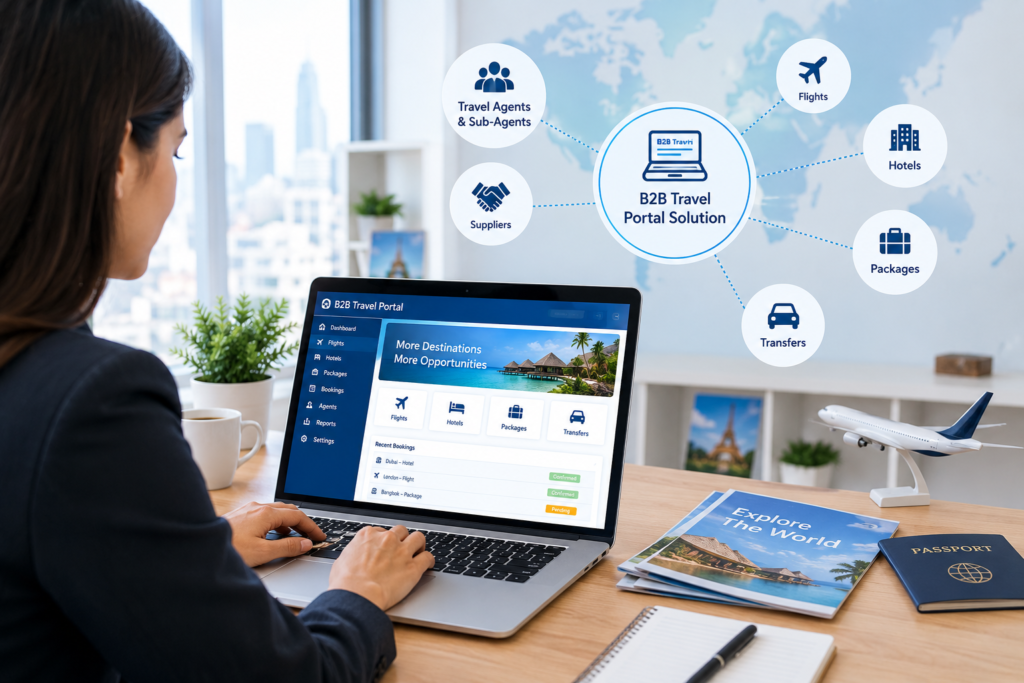
Managing a travel business involves much more than taking bookings. Agencies, tour operators, corporate travel teams, and other travel companies need to coordinate customers, suppliers, reservations, payments, employees, and daily enquiries without losing track of important details.
A Travel Management System brings these activities into one organized environment. Instead of depending on disconnected spreadsheets, emails, messaging apps, and separate booking tools, businesses can manage important workflows through a centralized platform.
The right system can make everyday operations easier, improve visibility across bookings, reduce repetitive administrative work, and give staff more time to focus on customers.
What Is a Travel Management System?
A travel management system is software designed to help travel businesses organize and manage their core operations from a central platform.
Depending on the business model, it may support activities such as booking management, customer records, supplier coordination, itinerary handling, payment tracking, reporting, and internal workflow management.
For example, a travel agency may receive a customer’s request for a hotel and flight package. Without centralized software, an employee might need to check several systems, record information manually, send updates through email, and later update a spreadsheet.
With an integrated system, much of this information can be managed within one workflow.
The purpose is not simply to replace paperwork with software. A well-designed platform helps connect different parts of the business so information can move more efficiently between them.
Why Travel Businesses Need Better Management Tools
Travel businesses deal with information that changes frequently. Booking details can be updated, customers may request modifications, suppliers can provide new availability, and employees may need access to the latest reservation information.
Managing these changes manually can become difficult as booking volume grows.
A centralized system helps create a consistent process. Staff can access customer and booking information without searching through multiple files or conversations.
It can also make responsibilities clearer. For example, one employee can handle an enquiry while another manages booking confirmation, with relevant information remaining accessible to authorized team members.
This becomes particularly useful for businesses handling multiple destinations, suppliers, travel products, or customer segments.
After the third heading, businesses looking to evaluate an appropriate solution can explore Travel Management System options based on their operational requirements, booking workflows, and growth plans.
Core Features That Matter Most
Not every travel business needs exactly the same software features. However, several capabilities can make a significant difference to daily operations.
Booking Management
Booking management is one of the central functions of travel software. Teams should be able to create, update, review, and track reservations without relying heavily on separate records.
A useful booking workflow should make important information easy to locate, including traveller details, travel dates, booking status, services, and relevant notes.
Customer Management
Customer information becomes more valuable when it is organized properly.
A centralized customer profile can help staff understand previous enquiries, active bookings, preferences, communication history, and other relevant information.
This reduces the need to repeatedly ask customers for information they have already provided.
Supplier and Inventory Coordination
Travel agencies often work with multiple suppliers and service providers. Managing supplier information manually can make availability and booking processes harder to control.
A management system can help organize supplier-related information and connect it with booking workflows where appropriate.
Reporting and Business Visibility
Reports can help managers understand what is happening across the business.
Useful reporting may include booking activity, sales performance, customer activity, outstanding payments, or other operational information relevant to the business.
The goal is to turn everyday booking data into information that can support better decisions.
How Automation Improves Daily Operations
Automation does not mean removing people from the process. Instead, it can reduce repetitive work that consumes staff time.
Consider a common enquiry workflow. A customer provides travel requirements, an employee gathers options, prepares the booking, records the information, communicates with the customer, and later updates the booking status.
If every step requires manual data entry, simple tasks can quickly become time-consuming.
A connected system can automate or simplify selected parts of this workflow. Information entered once may be available to other relevant areas instead of being manually copied several times.
This can also reduce the risk of inconsistencies caused by repeated data entry.
Supporting B2B and B2C Travel Operations
Travel businesses can have very different customer structures.
A B2C agency may primarily need tools for managing individual travellers, enquiries, bookings, payments, and customer communication.
A B2B travel business may need additional capabilities for managing travel agents, sub-agents, corporate clients, commissions, access levels, and partner bookings.
The important point is that software should reflect the company’s actual operating model rather than forcing every business into the same workflow.
For growing companies, scalability also matters. A platform that works for a small team should ideally be capable of supporting higher booking volumes and additional users as operations expand.
What Makes a Travel Management System Practical?
A long list of features does not automatically make software useful.
The practical value comes from how well those features work together.
A system should have a clear interface that employees can understand without unnecessary complexity. Information should be easy to find, common tasks should require reasonable effort, and workflows should match how the business actually operates.
Integration is another important consideration. Travel businesses may use booking engines, APIs, payment services, accounting tools, communication platforms, or other systems.
When relevant tools can work together, employees spend less time moving information manually between platforms.
Security and access controls should also be considered, particularly when the system handles customer and booking information.
How Synch Travel Can Fit Into a Modern Travel Workflow
For businesses evaluating technology for travel operations, the focus should remain on solving practical workflow problems rather than simply choosing software with the largest feature list.
Synch Travel provides travel technology solutions designed around different business requirements, including booking and travel management workflows.
The right approach is to first identify where the current process creates delays or unnecessary manual work. A business can then determine which software capabilities directly address those areas.
For example, if employees spend too much time managing booking information across multiple systems, centralized booking management may be a priority. If customer information is difficult to track, CRM functionality may deserve greater attention.
How to Choose the Right System
Before selecting a platform, travel businesses should evaluate their current workflow and future requirements.
Start by identifying the activities that consume the most staff time. These could include booking management, customer follow-ups, reporting, supplier coordination, or manual data entry.
Then consider the following questions:
- Does the system support the company’s business model?
- Can employees manage bookings efficiently?
- Is customer information organized in one place?
- Can the platform integrate with required travel APIs or other tools?
- Are reporting capabilities suitable for management needs?
- Can user roles and permissions be controlled?
- Is the system flexible enough to support future growth?
- Is training and ongoing support available?
It is also useful to test the actual workflow rather than evaluating features individually. Ask how a real customer enquiry would move from the first contact through quotation, booking, payment, confirmation, and post-booking support.
That practical test can reveal whether the platform genuinely fits the business.
Benefits for Growing Travel Companies
As a travel business grows, operational complexity usually grows with it.
More customers mean more records. More bookings create additional administrative work. More staff members require clearer access and responsibilities. More suppliers can make information management harder.
A centralized management system can provide a structured foundation for handling this growth.
It can help teams work from shared information, reduce repetitive administrative activities, and create more consistent processes.
For managers, centralized information can also improve visibility. Instead of depending entirely on individual employees for updates, relevant business information can be available through the system.
Common Mistakes to Avoid
Choosing software based only on the number of features can lead to unnecessary complexity.
A travel company should avoid paying for functionality it will not use while overlooking capabilities that directly affect its daily operations.
Another common mistake is ignoring integration requirements. If the business depends on specific booking APIs, supplier connections, payment processes, or other systems, compatibility should be checked before implementation.
Poor staff adoption can also reduce the value of new software. Even capable technology may not deliver the expected results if employees find the workflow confusing or difficult.
Training, usability, and implementation should therefore be considered alongside technical features.
The Future of Travel Business Management
Travel businesses increasingly need systems that connect rather than isolate different parts of their operations.
Booking management, customer information, supplier connectivity, reporting, and automation can become more useful when they operate within a coordinated environment.
The goal is not simply to digitize existing tasks. It is to create smoother workflows that allow employees to spend less time on repetitive administration and more time handling customers and business priorities.
For companies planning long-term growth, flexibility will remain important. Travel requirements can change quickly, so management technology should be capable of adapting as products, customers, and operational processes evolve.
Conclusion
A travel management system can provide much more than a digital place to store booking information. When selected and implemented properly, it can connect important business processes, improve operational visibility, simplify customer management, and reduce repetitive administrative work.
The best solution depends on the company’s size, business model, booking workflow, integration requirements, and future plans. Instead of choosing software based on features alone, travel businesses should focus on how effectively the system solves their actual operational challenges.
For a growing travel company, the right technology can create a more organized foundation for managing bookings today while supporting a more efficient operation tomorrow.