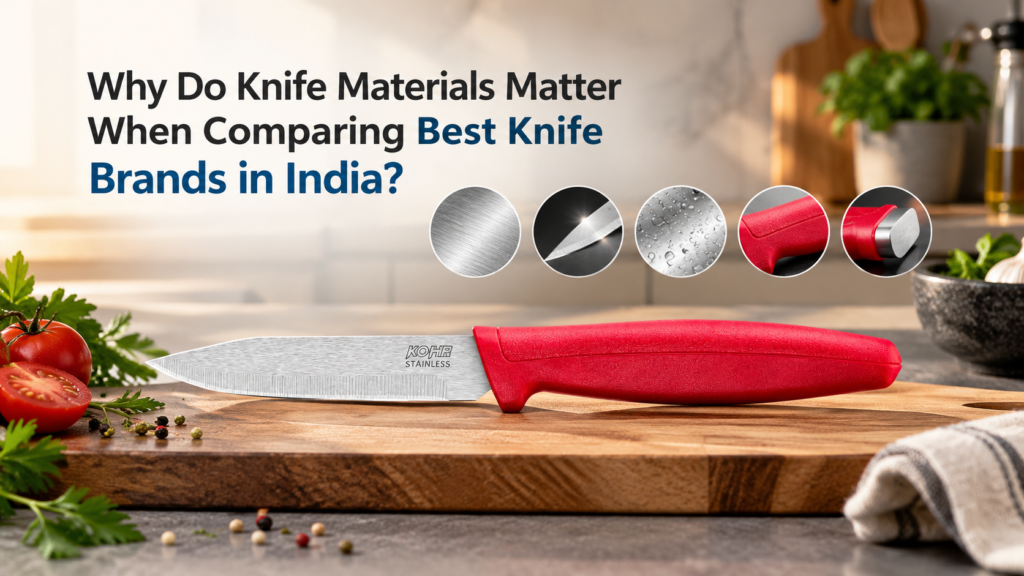
Choosing a kitchen knife involves more than comparing its appearance, price, or brand name. The material used to manufacture the blade and handle can directly influence cutting performance, durability, rust resistance, maintenance requirements, and comfort during everyday cooking. Understanding these differences helps consumers make informed decisions based on their cooking habits and practical needs.
In India, kitchen knives are used for a wide variety of tasks, from chopping onions and slicing tomatoes to cutting vegetables, preparing meat, and handling ingredients with different textures. These tasks place different demands on a knife. When comparing the Best Knife Brands in India, understanding how blade materials affect cutting performance, durability, and maintenance helps buyers choose a knife that suits their everyday kitchen needs. A blade that performs well for occasional fruit preparation may not offer the same convenience for frequent, heavy-duty kitchen work.
When researching the best knife brands in India, buyers should therefore look beyond brand reputation and examine the materials used in each product. Stainless steel, carbon steel, blade thickness, edge geometry, and handle construction all contribute to the overall experience. However, no single material is ideal for every kitchen or user.
For households and food-service professionals in Ludhiana, these considerations are particularly relevant when comparing kitchen knives for regular Indian cooking. Brands such as Kohe KGOC can be included in product research, but the most useful comparison begins with understanding specifications, intended applications, and maintenance requirements rather than relying on brand names alone.
This guide explains how knife materials affect performance, how different materials compare, and what buyers should examine before selecting a kitchen knife in India.
What Makes Knife Materials Important?
Knife materials determine several practical characteristics of a blade, including how well it resists corrosion, retains its edge, withstands repeated use, and responds to sharpening.
The handle material also matters because it influences grip, balance, comfort, and ease of cleaning. A knife should be evaluated as a complete tool rather than by blade material alone.
The main factors to consider are:
- Durability: How well the knife withstands normal use.
- Corrosion resistance: How effectively the blade resists rust and staining.
- Edge retention: How long the cutting edge remains effective.
- Sharpenability: How easily the blade can be restored when it becomes dull.
- Comfort and control: How the handle, weight, and balance affect handling.
- Maintenance: How much care is needed to preserve the knife’s condition.
These characteristics help explain why two knives designed for similar tasks can perform differently over time.
How Does Stainless Steel Affect Kitchen Knife Performance?
Stainless steel is widely used in kitchen knives because it offers useful corrosion resistance and is available in many different grades and compositions.
Its resistance to rust comes primarily from chromium, which helps form a protective surface layer. However, stainless steel is not completely rustproof. Prolonged moisture, food residues, harsh chemicals, and unsuitable storage conditions can still cause staining or corrosion.
Advantages of Stainless Steel
Stainless steel knives are often practical for Indian kitchens because they can handle regular food preparation without requiring the same level of moisture precautions associated with some carbon steel knives.
Important benefits include:
- Good corrosion resistance, depending on the steel grade.
- Relatively straightforward everyday maintenance.
- Availability in different hardness levels and price categories.
- Suitability for a broad range of kitchen applications.
What Should Buyers Check?
The term “stainless steel” alone does not establish a knife’s overall quality. Buyers should consider the steel grade, heat treatment, blade design, construction, and manufacturer’s care instructions.
Two stainless steel knives can have different edge retention and sharpening characteristics because their composition and manufacturing processes may differ.
Why Do Blade Hardness and Thickness Matter?
The steel type is only one part of a knife’s performance. Hardness, thickness, and edge geometry also influence how the blade behaves during cutting.
Blade Hardness and Edge Retention
Hardness describes a material’s resistance to indentation or deformation. In knife blades, appropriate hardness can help an edge retain its shape during use.
However, harder steel is not automatically better. Depending on the steel and heat treatment, excessive hardness can increase the risk of chipping. Softer blades may deform or lose their edge more quickly but can sometimes be easier to maintain.
A well-designed knife balances hardness, toughness, and the intended cutting task.
Blade Thickness and Cutting Control
Blade thickness affects how a knife moves through food. A thinner blade may pass through delicate ingredients with less resistance, while a thicker blade may provide additional strength for suitable applications.
Nevertheless, thickness alone does not determine performance. The blade’s taper, cutting-edge angle, and overall geometry also matter.
For everyday Indian cooking, buyers should select a knife designed for the ingredients and preparation methods they commonly use.
How Does Handle Material Influence Comfort and Safety?
The handle affects how securely and comfortably a knife can be held. Even a blade made from suitable steel may be inconvenient if its handle feels slippery, poorly balanced, or uncomfortable during extended preparation.
Common handle materials include plastic, rubber-like synthetic materials, wood, and composite materials. Each has different characteristics.
- Plastic: Generally easy to clean and available in different shapes.
- Synthetic grip materials: May provide additional grip, depending on their surface design.
- Wood: Offers a traditional appearance but may require more careful cleaning and drying.
- Composite materials: Can combine durability with different grip and design characteristics.
When comparing knives, check whether the handle fits comfortably in your hand and remains secure during ordinary use. Keep both the blade and handle clean, and avoid using a knife with a loose handle or damaged construction.
How Should Buyers Compare Knife Brands in India?
When comparing knife brands in India, consumers should evaluate individual products rather than assume every knife from one manufacturer has identical characteristics.
A useful comparison includes the following checks:
- Identify the intended use. Decide whether the knife is meant for vegetables, fruits, general food preparation, carving, or another specific task.
- Check the blade material. Look for the stated steel type or grade instead of relying on a generic material description.
- Review construction quality. Examine the blade finish, handle attachment, balance, and visible workmanship.
- Understand maintenance needs. Confirm the recommended cleaning, drying, and sharpening methods.
- Consider ergonomics. Choose a handle shape and knife weight that allow controlled handling.
- Review product information. Look for clear specifications, manufacturer guidance, warranty terms where applicable, and credible user feedback.
- Compare products for the same purpose. A chef’s knife and a small paring knife should not be judged by identical performance expectations.
These checks provide a more reliable basis for comparing products than brand recognition alone.
What Should Buyers in Ludhiana Consider?
For consumers in Ludhiana, kitchen knife selection should reflect local shopping options, household cooking routines, and the availability of reliable product information.
People who prepare meals daily may prioritize corrosion resistance, comfortable handling, and straightforward maintenance. Commercial kitchens may place greater emphasis on repeated-use performance, consistent sharpening, and suitability for specific preparation tasks.
When researching Kohe KGOC or other kitchen knife options, buyers can use the same evaluation criteria: material specifications, intended use, construction, care instructions, and product-level information.
Availability and specifications may vary between individual products, so these details should be verified through the relevant product listing or manufacturer documentation before making a purchase.
Conclusion
Knife materials matter because they influence how a kitchen knife cuts, how long its edge remains effective, how resistant it is to corrosion, and how much maintenance it requires. Stainless steel and carbon steel each have advantages, while hardness, blade geometry, handle design, and construction determine how those materials perform in practice.
For anyone researching the best knife brands in India, a product-focused comparison is more informative than relying on brand reputation alone. Consumers in Ludhiana can make more confident decisions by identifying their cooking needs, checking manufacturer specifications, and understanding the care required for each knife. When exploring kitchen knife options, buyers can also review the product information available from Kohe KGOC to understand the materials, features, and intended applications of individual products.
Before selecting a product, review its documented features and intended applications. A little research into materials and construction can help you choose a kitchen knife that suits your routine and remains practical with proper care.
FAQs
1. Which material is commonly used for kitchen knives in India?
Stainless steel is commonly used because it offers corrosion resistance and practical everyday maintenance. The performance of a particular knife depends on its steel composition, heat treatment, blade geometry, and construction.
2. Does a stainless steel knife stay sharp for longer?
Not necessarily. Edge retention depends on the steel grade, hardness, heat treatment, cutting-edge geometry, and how the knife is used. Regular inspection and appropriate sharpening help maintain cutting performance.
3. Is carbon steel suitable for Indian kitchens?
Yes. Carbon steel can be suitable when users are willing to dry the blade promptly, clean it after use, and store it properly. Its greater susceptibility to corrosion makes maintenance especially important in humid or wet conditions.
4. How can buyers compare knife brands in India?
Compare individual products by blade material, edge retention, handle comfort, construction, intended use, maintenance requirements, and available product documentation. Avoid making decisions based only on the brand name.
5. What should buyers check before selecting a knife in Ludhiana?
Buyers should check the knife’s intended application, blade and handle materials, grip, construction, care instructions, and verified specifications. They should also confirm product availability and any applicable warranty terms.