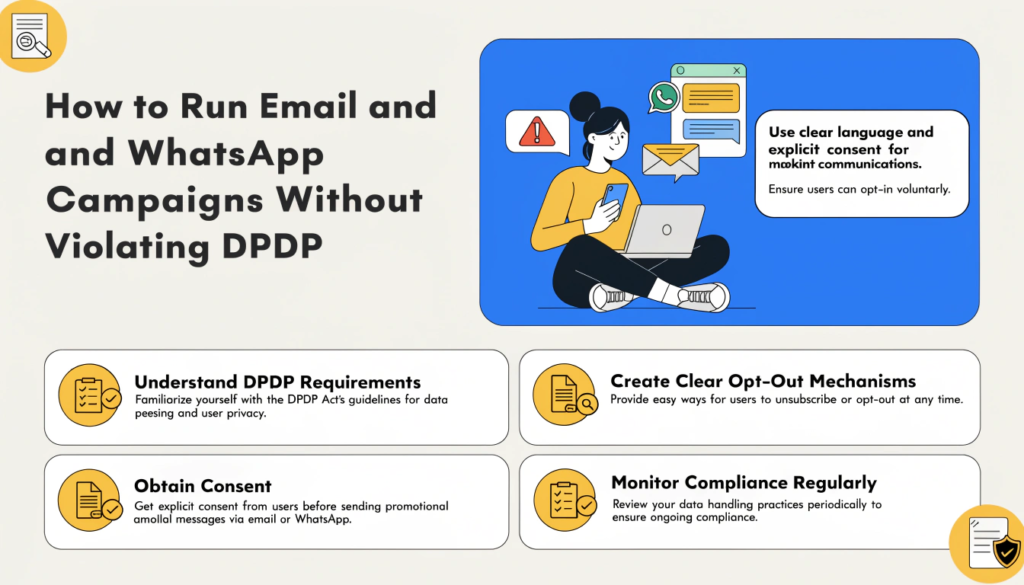
Digital marketing in India is changing rapidly with the implementation of the Digital Personal Data Protection (DPDP) Act, 2023. Businesses can no longer rely on outdated marketing practices like sending bulk promotional emails or WhatsApp messages without proper user consent.
In 2026, companies running email marketing and WhatsApp campaigns must focus on privacy-first communication strategies to avoid compliance risks and maintain customer trust.
This guide explains how businesses can run effective marketing campaigns while staying compliant with India’s DPDP regulations.
Understanding DPDP and Marketing Communication
The DPDP Act regulates how businesses collect, store, process, and use personal data. Marketing communication falls directly under this framework because companies use customer information such as:
- Email addresses
- Phone numbers
- Purchase history
- Behavioral data
- Customer preferences
Any organization using this information for promotional campaigns must ensure lawful and transparent processing.
Why DPDP Compliance Matters for Marketing
Many businesses still treat email and WhatsApp marketing as unrestricted promotional channels. However, non-compliant communication practices can create serious issues such as:
- Customer complaints
- Consent violations
- Brand reputation damage
- Regulatory scrutiny
- Financial penalties
Privacy-conscious customers are increasingly avoiding brands that misuse personal data or send excessive marketing communication.
The Role of Consent in Email and WhatsApp Campaigns
Consent is one of the most important requirements under the DPDP Act.
Businesses should ensure that users:
- Clearly agree to receive marketing communication
- Understand what type of messages they will receive
- Can withdraw consent easily at any time
Pre-checked boxes, hidden permissions, or misleading consent forms can create compliance risks.
Best Practices for Collecting Consent
Businesses should:
- Use clear opt-in forms
- Explain communication frequency
- Separate marketing consent from general terms
- Maintain consent records
- Allow one-click unsubscribe options
Transparent consent collection improves both compliance and campaign performance.
Email Marketing Compliance Under DPDP
Email campaigns remain highly effective when executed responsibly.
Important Compliance Steps
Use Verified Consent Lists
Only send emails to users who have actively opted in.
Avoid:
- Purchased email databases
- Scraped contact lists
- Third-party unauthorized data
Provide Easy Unsubscribe Options
Every promotional email should include a simple unsubscribe mechanism.
Users should never struggle to stop receiving communication.
Limit Excessive Communication
Sending too many emails may increase spam complaints and reduce customer trust.
Focus on:
- Relevant content
- Personalization
- Value-driven communication
Secure Customer Data
Email databases should be protected with:
- Access controls
- Encryption
- Secure storage systems
Data breaches involving customer contact information can lead to serious legal and reputational consequences.
WhatsApp Marketing and DPDP Compliance
WhatsApp marketing is growing rapidly in India, but it also carries privacy responsibilities.
Businesses using WhatsApp campaigns should:
- Obtain explicit messaging consent
- Use approved business communication channels
- Avoid spam-like promotional messaging
- Respect opt-out requests immediately
Avoid Unauthorized Messaging Practices
Sending unsolicited promotional messages can damage customer trust and create compliance concerns.
Companies should avoid:
- Bulk spam campaigns
- Automated unsolicited messages
- Excessive follow-ups
- Messaging after opt-out
Managing Consent Withdrawal Correctly
One of the most important DPDP obligations is respecting user consent withdrawal.
If a customer opts out:
- Promotional communication must stop
- Consent records should be updated immediately
- Marketing automation systems should sync suppression lists
Businesses often make mistakes by continuing campaigns even after users unsubscribe.
Organizations should also understand the risks associated with Re-Engagement Campaigns after Consent Withdrawal, especially when attempting to reconnect with users who have already opted out of communication.
Importance of Consent Management Platforms
Modern businesses are increasingly adopting Consent Management Platforms (CMPs) to automate compliance processes.
These platforms help organizations:
- Track user consent
- Store consent logs
- Manage opt-ins and opt-outs
- Handle withdrawal requests
- Maintain compliance documentation
CMPs reduce operational errors and improve transparency.
Common DPDP Violations in Marketing Campaigns
Many organizations unknowingly violate privacy rules through poor marketing practices.
Common mistakes include:
- Sending messages without consent
- Ignoring unsubscribe requests
- Sharing customer data with third parties
- Retaining data after consent withdrawal
- Poor documentation of user permissions
These practices can expose businesses to regulatory risks.
How to Build Privacy-Friendly Campaigns
Focus on First-Party Data
Businesses should prioritize data collected directly from users through transparent interactions.
Use Segmentation Carefully
Only use customer data for purposes clearly explained during consent collection.
Create Value-Driven Communication
Customers respond better to:
- Helpful updates
- Educational content
- Relevant offers
- Personalized experiences
Trust-based marketing delivers stronger long-term engagement.
Conduct Regular Compliance Audits
Marketing teams should periodically review:
- Consent records
- Campaign workflows
- Data retention practices
- Third-party integrations
Regular audits help identify compliance gaps early.
Future of Privacy-Centric Marketing in India
Privacy-focused marketing is becoming a competitive advantage in India’s digital economy. Businesses that prioritize user trust and transparent communication will likely build stronger customer relationships over time.
As privacy regulations evolve further, companies relying on outdated marketing practices may face increasing operational challenges.
Organizations that combine personalization with responsible data handling will be better positioned for sustainable growth.
Conclusion
Running email and WhatsApp campaigns under the DPDP framework requires more than just marketing expertise. Businesses must establish transparent consent practices, secure customer data, respect user preferences, and manage communication responsibly.
Companies that adopt privacy-first marketing strategies can improve customer trust while reducing compliance risks.
Understanding challenges related to Re-Engagement Campaigns after Consent Withdrawal is also essential for avoiding violations when handling opt-out users in modern digital campaigns.
FAQs:
1. Does the DPDP Act apply to email marketing?
Yes, businesses using personal data for email marketing must comply with DPDP consent and data processing requirements.
2. Can businesses send WhatsApp promotions without consent?
No, businesses should obtain explicit user consent before sending promotional WhatsApp messages.
3. What happens if users withdraw consent?
Businesses must stop promotional communication and update their marketing systems immediately.
4. Are purchased email lists allowed under DPDP?
Using purchased or unauthorized email lists can create compliance risks because users may not have provided valid consent.
5. Why are unsubscribe options important?
They help users exercise their rights and allow businesses to maintain compliance with consent withdrawal obligations.
6. What is a Consent Management Platform?
A CMP helps businesses track, manage, and document user consent for privacy compliance.
7. Can businesses run re-engagement campaigns after opt-out?
Businesses must be extremely careful because contacting users after consent withdrawal can create compliance concerns.
8. How can businesses make marketing campaigns DPDP-compliant?
By obtaining clear consent, respecting opt-outs, securing customer data, and maintaining transparent communication practices.