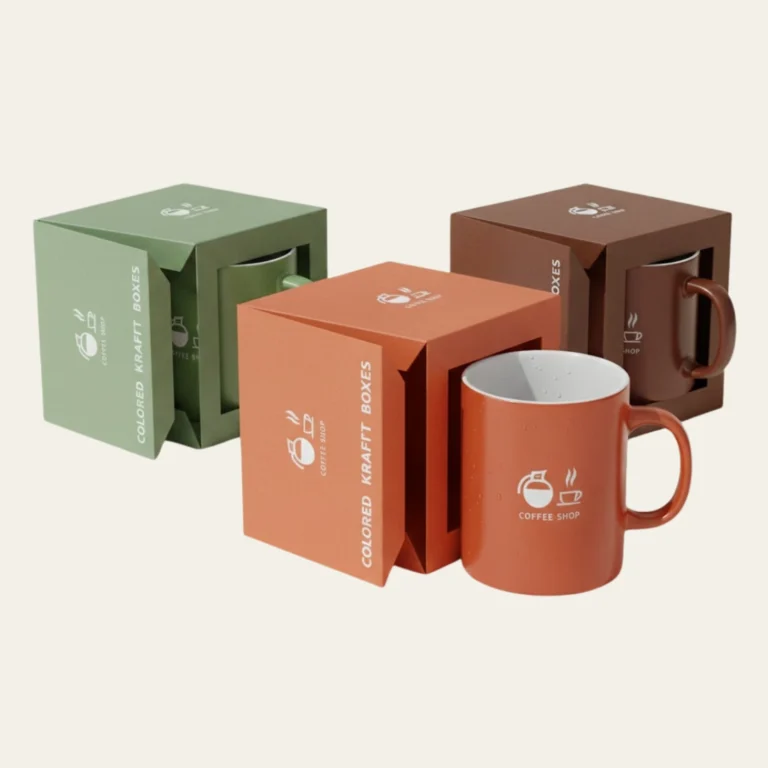
Custom drinkware boxes
Shipping glassware requires careful packaging because glasses, mugs, tumblers, and other drinkware can crack or break when exposed to impacts, vibration, or pressure. Even a small amount of movement inside a box can cause items to strike one another, particularly when several pieces are packed together. Custom drinkware packaging helps address these risks by providing suitable box dimensions, internal dividers, cushioning, and a structure designed around the products being shipped.
The right packaging depends on the type of glassware, the number of pieces in each order, and the conditions the package may encounter during handling. A single drinking glass has different requirements from a boxed set of wine glasses or a collection of ceramic mugs. Understanding these differences helps businesses choose packaging that keeps products separated and reduces the likelihood of shipping damage.
Understand the Risks of Shipping Glassware
Glassware can be damaged in several ways during transportation. Packages may be dropped, stacked under heavier shipments, or exposed to repeated movement while being handled. These conditions can place pressure on fragile areas or cause items to collide inside the box.
Different drinkware products also have different weak points. Thin drinking glasses may crack around the rim, stemmed glasses can break at the stem, and large glass pitchers may experience stress around their handles.
Packaging should account for these product-specific risks rather than relying on a standard box alone. Identifying the most vulnerable areas helps businesses determine where dividers, cushioning, or additional structural support may be needed.
Choose the Right Box Size for Each Product
The size of the outer box affects how well glassware stays in position during shipping. A box that is too large may allow products to move around, while a box that is too small can place unwanted pressure on the glass or leave insufficient room for protective materials.
Custom drinkware boxes can be designed around the dimensions of individual glasses, mugs, tumblers, and complete sets. This allows businesses to account for product height, width, handles, stems, and any protective wrapping.
When measuring glassware, include its widest points and any protruding components. If each item will be wrapped individually, account for the additional space required by that material.
The final dimensions should accommodate the product and its protective arrangement without leaving excessive empty space. The goal is a stable package that can be assembled consistently and withstand the expected handling conditions.
Use Dividers to Keep Glasses Separate
Dividers are especially useful when several pieces of glassware are packed in one carton. Without separation, individual items may knock against each other when the package moves.
Custom inserts can create dedicated compartments for each glass or mug. These compartments help maintain spacing and reduce direct contact between products.
Paperboard dividers are commonly used for drinkware sets because they can separate multiple items without adding excessive weight. Corrugated partitions may be suitable when a stronger internal structure is required.
The divider design should match the product’s shape. A compartment for a straight-sided tumbler may not fit a wine glass with a narrow stem or a mug with a large handle. Accurate sizing helps prevent items from shifting within their individual spaces.
Add Cushioning Around Fragile Areas
Dividers help prevent glassware from touching, but they may not provide enough cushioning on their own. Protective materials can absorb some of the energy created by impacts and reduce the chance of damage.
Depending on the product and packaging design, businesses may use paper cushioning, molded pulp inserts, foam supports, or other suitable protective materials.
For stemmed glassware, support around the bowl and stem may be necessary to limit movement. Mugs may need clearance around their handles, which can be vulnerable to impact. Large glasses may require support around the base and sides.
The cushioning should hold the product securely without applying concentrated pressure to delicate areas. Simply filling empty spaces with loose material may not be sufficient if the glassware can still move during shipping.
Select a Strong Outer Packaging Structure
Internal protection works best when the outer box can withstand the expected handling conditions. A carton that bends or collapses under pressure may transfer force to the glassware inside.
Corrugated shipping boxes are often suitable for fragile products because their layered structure can provide strength and cushioning. The appropriate board grade depends on the weight of the packed items, the shipping method, stacking conditions, and the amount of internal protection.
Lightweight retail cartons may be suitable for displaying individual drinkware products, but they may need to be placed inside a stronger shipping carton for delivery.
Businesses should evaluate the complete packaging system rather than assuming that an attractive retail box will provide sufficient protection on its own.
Protect Handles, Rims, and Stems
Some parts of drinkware are more vulnerable than others. Handles, thin rims, narrow stems, and decorative attachments may break if they come into contact with other items or receive concentrated pressure.
Custom packaging can provide additional clearance around these areas. Inserts may be shaped to support the product without pressing directly against delicate components.
For example, a ceramic mug needs enough room around its handle to prevent contact with neighboring mugs. A wine glass may require a compartment that keeps its stem from bearing the weight of the product above it.
These details should be considered when developing the internal layout. A general-purpose insert may not offer the right support for every type of glassware.
Package Multiple Glassware Items in an Organized Layout
Businesses that sell drinkware sets need to consider how the products fit together inside the box. A set of four tumblers, six wine glasses, or several mugs may require a different internal arrangement depending on the shape and weight of each item.
A compartmentalized layout can keep products in fixed positions and make packing more consistent. It can also help warehouse staff identify where each item belongs when assembling an order.
When designing a multi-piece package, consider whether the products are identical or include different shapes and sizes. If the set contains accessories, such as lids, straws, or cleaning brushes, provide separate spaces so these components do not move into contact with the glassware.
The completed package should be tested with every item in its intended position before the design is approved.
Consider Protective Packaging for E-Commerce Orders
Online drinkware orders often pass through several handling stages before reaching the customer. A package may be sorted, loaded, unloaded, and moved between delivery facilities.
For this reason, e-commerce packaging should account for more than the initial fit of the product. The retail box may need an outer shipping carton, internal cushioning, and enough space for the protective arrangement.
The shipping carton should hold the retail package securely, while cushioning around it helps reduce movement inside the outer box. Avoid leaving large unfilled gaps that allow the inner package to shift.
Businesses should also consider the combined weight of the glassware, box, inserts, and shipping materials. A practical design can provide suitable protection without adding unnecessary bulk.
Choose Materials Based on Protection Needs
Different packaging materials serve different purposes. The best choice depends on the product, the required level of support, the shipping conditions, and the business’s packaging preferences.
Corrugated Cardboard
Corrugated cardboard is commonly used for outer shipping cartons and protective partitions. Its structure can provide support for heavier drinkware sets and help resist compression when the correct grade is selected.
Paperboard
Paperboard can be used for retail cartons, dividers, and lightweight internal components. It is useful when compartments need to be cut and folded into specific shapes.
Molded Pulp
Molded pulp inserts can be designed around particular product shapes. They may be useful for holding individual glasses in position while separating them from neighboring items.
Foam Inserts
Foam can provide cushioning and support for delicate or high-value glassware. Its suitability depends on the product, the foam type, and the packaging requirements.
Material selection should consider the full packaging arrangement. For example, a paperboard divider may separate glasses effectively but still need additional cushioning inside a corrugated shipping carton.
Secure the Box During Packing
Even a well-designed package can fail if it is assembled incorrectly. Glassware should be placed in its designated compartments, and all inserts should fit as intended before the box is closed.
Use a closure method suitable for the package’s weight and shipping conditions. Shipping cartons may require appropriate packing tape and secure seams, while retail boxes may use tuck flaps or other closures.
Avoid forcing the lid shut when the contents are too high or the inserts are incorrectly positioned. Excessive pressure on the top of the package can transfer force to the products inside.
Packing instructions can help staff follow the same process for every order, reducing inconsistencies during high-volume fulfillment.
Test the Packaging Before Shipping at Scale
Testing helps reveal problems that may not be obvious from the box’s appearance. A sample package should be assembled with the actual drinkware, inserts, and shipping materials that will be used for customer orders.
Check whether the products remain in place when the package is gently moved. Inspect the clearance around handles, rims, and stems, and look for any areas where the glass touches another item or the outer carton.
For larger orders or long-distance distribution, businesses may need more formal package testing based on the expected shipping environment. Testing may include controlled drops, vibration, and compression, depending on the risks and applicable requirements.
One successful test does not guarantee that every shipment will arrive without damage, but a repeatable testing process can help identify weaknesses before packaging is produced in large quantities.
Balance Product Protection With Packaging Costs
Additional inserts, stronger cartons, and protective materials can increase packaging costs. However, choosing packaging based only on the lowest unit price may create higher expenses if products arrive damaged.
Businesses should compare the total cost of the packaging system with the needs of the product. This includes the outer carton, inserts, cushioning, packing labor, storage space, and shipping dimensions.
For products sold in several sizes, using a common outer carton may simplify inventory in some cases. However, the internal compartments must still fit each product correctly. A single box size should not be used across an entire product range if it compromises the fit or protection of individual items.
Testing different packaging arrangements can help businesses find a practical balance between protection, material use, and shipping efficiency.
Final Thoughts
Custom drinkware packaging can reduce shipping damage by combining suitable box dimensions, internal dividers, cushioning, and a strong outer carton. The design should account for the specific shape of each item, especially vulnerable features such as handles, rims, and stems.
Businesses should test the complete package with their actual products before placing a large order. By checking the fit, internal support, closure, and performance under realistic handling conditions, they can identify potential problems before shipping glassware to customers.
The right packaging system is one that keeps each item properly positioned, provides suitable protection for the journey, and remains practical to assemble, store, and ship.