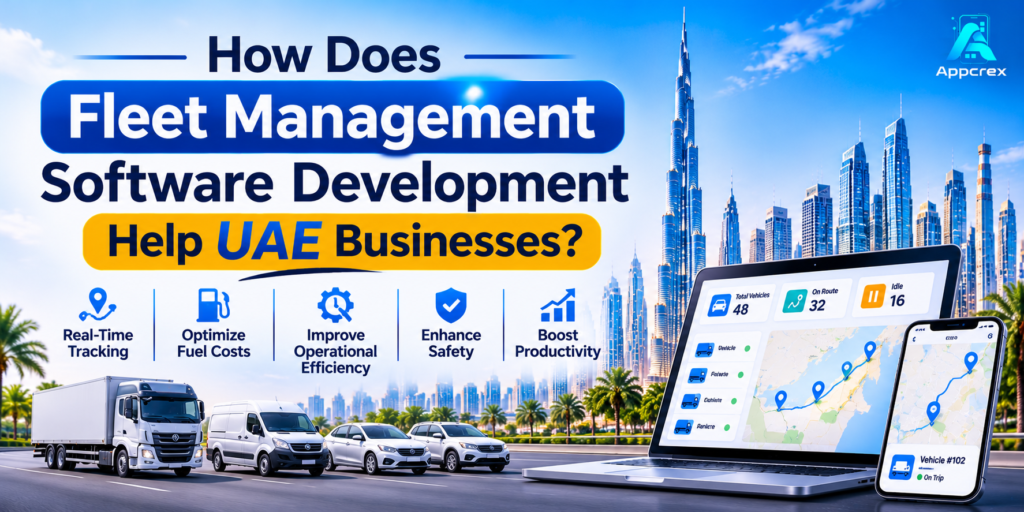
Fleet management software development helps businesses in the UAE monitor vehicles, manage drivers, optimise routes, control fuel expenses, and improve transportation operations through a centralised digital platform. Companies operating in logistics, delivery, construction, transportation, and car rental increasingly need technology to manage their fleets efficiently.
Traditional fleet management methods often depend on spreadsheets, phone calls, manual records, and disconnected systems. These methods make vehicle tracking, maintenance scheduling, and driver management difficult as businesses expand.
Modern fleet management software combines GPS tracking, artificial intelligence (AI), Internet of Things (IoT), cloud computing, and data analytics to simplify daily operations. Businesses in Dubai, Abu Dhabi, Sharjah, and other UAE locations use digital fleet solutions to improve visibility, reduce operational expenses, and manage vehicles more effectively.
Whether you operate a small delivery company or a large transportation business, investing in a customised fleet management solution helps you manage your vehicles through one connected platform.
In this guide, we explain the essential features, benefits, development process, technology stack, and fleet management software development cost for UAE businesses.
What Is Fleet Management Software?
Fleet management software is a digital platform that helps businesses manage commercial vehicles, drivers, trips, fuel consumption, maintenance schedules, and transportation activities.
Instead of handling operations manually, businesses use a centralised system to monitor fleet performance and access real-time information.
A complete fleet management platform generally includes three main components:
- Driver Mobile Application
The driver application allows employees to manage assigned trips and communicate with fleet managers.
Important features include:
- Secure login and profile management.
- Trip assignments and updates.
- GPS navigation.
- Route guidance.
- Digital proof of delivery.
- Vehicle inspection checklists.
- Emergency notifications.
- Trip history.
- Fleet Manager Dashboard
The fleet manager dashboard provides an overview of daily vehicle operations.
Managers can access:
- Real-time vehicle tracking.
- Driver performance reports.
- Fuel consumption records.
- Vehicle maintenance schedules.
- Route and trip management.
- Fleet utilisation reports.
- Operational analytics.
- Admin Panel
The admin panel gives business owners control over the complete fleet management platform.
Administrators can manage vehicles, drivers, user permissions, trip assignments, notifications, business reports, and system configurations.
A custom fleet management system development project connects these components to create a complete solution for transportation and logistics operations.
Why Do UAE Businesses Need Fleet Management Software?
The UAE has a growing transportation, logistics, construction, and delivery ecosystem. Businesses frequently manage vehicles across different locations and need reliable systems to monitor daily operations.
Fleet management software helps organisations address common operational challenges.
- Real-Time Vehicle Tracking
GPS tracking provides information about vehicle location, speed, movement, and trip status.
Fleet managers can monitor vehicles through interactive maps and respond to delays or unexpected stops.
For example, a logistics company in Dubai can monitor delivery vehicles travelling between warehouses, distribution centres, and customer locations.
- Better Route Optimisation
Traffic congestion, road restrictions, and inefficient route planning increase delivery times and fuel consumption.
Fleet management platforms use mapping services and route optimisation tools to recommend suitable routes based on location, distance, traffic conditions, and delivery priorities.
This helps businesses improve trip planning and reduce unnecessary travel.
- Fuel Cost Management
Fuel expenses represent a major operating cost for transportation businesses.
A fleet management system tracks fuel consumption, vehicle mileage, idling time, and driving patterns.
Managers can analyse fuel reports, identify unusual consumption, and take steps to improve efficiency.
- Driver Performance Monitoring
Driver behaviour directly affects road safety, fuel usage, and vehicle maintenance expenses.
A modern platform monitors indicators such as speeding, harsh braking, rapid acceleration, and excessive idling.
Businesses can use these insights to identify risky driving patterns and improve driver training.
- Preventive Vehicle Maintenance
Unexpected vehicle breakdowns affect delivery schedules and increase repair expenses.
Fleet management software tracks service history, mileage, inspection records, and maintenance schedules.
Automated reminders help managers arrange vehicle servicing before major mechanical problems occur.
What Features Should a Fleet Management Application Include?
A successful fleet management application development project should focus on the requirements of drivers, fleet managers, and business administrators.
The following features support efficient fleet operations.
- Live GPS Tracking
GPS tracking displays the current location of vehicles through a digital map.
Managers can monitor vehicle movement, trip progress, speed, and route history.
- Route Planning and Optimisation
Route planning tools recommend efficient routes based on distance, traffic conditions, delivery locations, and scheduling requirements.
Advanced systems also support multiple-stop planning and route adjustments.
- Driver Management
Driver management features help businesses maintain employee records and monitor operational performance.
The system can store driver profiles, licence details, assigned vehicles, attendance, trip history, and performance reports.
- Fuel Management
Fuel management functionality tracks consumption and related expenses.
Businesses can compare fuel usage across vehicles and identify opportunities to reduce unnecessary spending.
- Vehicle Maintenance Management
This feature helps managers schedule inspections, servicing, repairs, and vehicle checks.
The platform also stores maintenance history and sends reminders when vehicles approach their next service date.
- Trip and Dispatch Management
Dispatch managers can assign trips based on vehicle availability, driver location, delivery requirements, and operational priorities.
Drivers receive trip details through their mobile applications.
- Digital Proof of Delivery
Drivers can submit delivery photographs, customer signatures, timestamps, or OTP confirmations.
These records help businesses verify completed deliveries and maintain transaction records.
- Reports and Analytics
Reporting dashboards provide information about vehicle utilisation, fuel expenses, driver productivity, maintenance costs, and delivery performance.
Managers use these insights to improve operational planning.
How Is AI Transforming Fleet Management Software?
Artificial intelligence is improving how transportation companies analyse fleet data and manage daily activities.
AI-powered fleet management software helps businesses identify patterns, automate selected tasks, and make informed operational decisions.
Predictive Maintenance
AI analyses vehicle data and maintenance records to identify patterns associated with possible mechanical failures.
This helps managers plan inspections and servicing before certain issues cause unexpected downtime.
Intelligent Route Optimisation
AI-powered systems analyse traffic information, delivery locations, and route conditions to recommend efficient travel plans.
Driver Behaviour Analysis
AI evaluates driving patterns such as harsh braking, speeding, and rapid acceleration.
Fleet managers use these insights to improve driver safety and identify areas requiring training.
Fuel Consumption Prediction
AI models analyse historical fuel usage, vehicle performance, and driving behaviour to identify unusual consumption patterns.
Automated Dispatching
Intelligent dispatch systems recommend suitable drivers and vehicles based on availability, location, workload, and delivery requirements.
Predictive Fleet Analytics
AI-powered analytics helps businesses identify operational trends, estimate maintenance requirements, and plan fleet utilisation.
Which Industries Benefit from Fleet Management Software in the UAE?
Fleet management solutions support businesses across several industries.
Logistics and Supply Chain
Logistics companies use fleet software to monitor shipments, manage delivery vehicles, optimise routes, and improve transportation visibility.
Transportation Companies
Passenger transport providers use fleet management platforms to monitor vehicles, assign drivers, manage schedules, and review performance.
Construction and Infrastructure
Construction companies manage trucks, heavy vehicles, machinery, and equipment across multiple project locations.
Fleet software helps monitor asset usage and maintenance requirements.
Food and Grocery Delivery
Delivery businesses use GPS tracking, automated dispatching, and real-time trip updates to coordinate drivers and improve delivery operations.
Oil and Gas
Oil and gas companies manage specialised vehicles and transportation activities across industrial locations.
Fleet software supports vehicle monitoring, maintenance planning, and operational reporting.
Car Rental Businesses
Car rental companies use fleet platforms to monitor vehicle availability, rental schedules, maintenance records, and vehicle utilisation.
Healthcare and Emergency Services
Hospitals and healthcare providers use fleet management solutions to monitor ambulances, medical transportation, and other essential vehicles.
What Is the Fleet Management Software Development Process?
Developing a reliable fleet management platform requires a structured approach. Each stage should address business requirements, technical needs, and user expectations.
Step 1: Requirement Analysis
The development team studies your fleet size, business model, operational challenges, and target users.
This stage identifies the required features, project scope, and technology requirements.
Step 2: UI/UX Design
Designers create user-friendly interfaces for drivers, managers, and administrators.
The design process includes wireframes, prototypes, dashboard layouts, and mobile application screens.
Step 3: Software Development
Developers build the main platform components, including:
- Driver mobile application.
- Fleet manager dashboard.
- Admin panel.
- GPS tracking module.
- Vehicle management.
- Trip management.
- Maintenance scheduling.
- Reporting and analytics.
Step 4: Third-Party Integrations
The development team integrates external services to extend platform functionality.
Common integrations include GPS devices, mapping APIs, IoT sensors, cloud platforms, notification services, and business management systems.
Step 5: Testing and Quality Assurance
The software undergoes functional, performance, security, API, and compatibility testing.
The team checks whether all modules work correctly across supported devices and platforms.
Step 6: Deployment and Maintenance
After successful testing, the application is deployed to production infrastructure and relevant app stores.
Ongoing maintenance includes bug fixing, security updates, performance monitoring, and feature improvements.
What Technology Is Used for Fleet Management System Development?
Selecting the right technology stack helps build a secure, scalable, and reliable fleet management platform.
| Component | Recommended Technologies |
| Mobile App Development | Flutter, React Native, Kotlin, Swift |
| Frontend Development | React.js, Next.js |
| Backend Development | Node.js, Python, Java, .NET |
| Database | PostgreSQL, MongoDB, MySQL |
| Cloud Infrastructure | AWS, Microsoft Azure, Google Cloud |
| GPS and Maps | Google Maps API, Mapbox |
| IoT Integration | MQTT, BLE, Telematics |
| Notifications | Firebase Cloud Messaging |
| Analytics | Power BI, Custom Dashboards |
The final technology stack depends on application complexity, expected fleet size, integration requirements, and long-term business goals.
How Much Does Fleet Management Software Development Cost in the UAE?
The fleet management software development cost depends on the number of features, application platforms, integrations, design complexity, and development requirements.
The following figures provide indicative planning ranges, not fixed market quotations.
| Software Type | Estimated Cost in USD |
| Basic Fleet Management Software | $15,000–$30,000 |
| Medium-Level Fleet Management Platform | $30,000–$60,000 |
| Advanced Fleet Management Software | $60,000–$100,000 |
| Enterprise AI-Powered Platform | $100,000–$200,000+ |
The actual budget depends on the project scope and development team’s location and experience.
Factors Affecting Development Cost
- Feature Complexity
Basic GPS tracking requires less development effort than a platform with predictive maintenance, advanced analytics, and automated dispatching.
- Platform Requirements
Building web, Android, and iOS applications increases development time and cost.
- GPS and IoT Integration
Connecting tracking devices, vehicle sensors, and telematics systems adds integration and testing requirements.
- Third-Party Services
Mapping APIs, cloud services, notification tools, and enterprise integrations affect the overall budget.
- Security Requirements
Authentication, role-based access, encrypted data storage, backups, and audit logs require additional implementation work.
- Maintenance and Support
Businesses should also plan for hosting, software updates, technical support, and future feature improvements.
For an accurate estimate, prepare your feature list and discuss your requirements with a professional development team.
What Should UAE Businesses Consider Before Developing Fleet Software?
Businesses should evaluate operational and regulatory requirements before launching a fleet management platform.
Important considerations include:
- GPS device compatibility.
- Vehicle and driver record management.
- Data security and access permissions.
- Mapping and telematics integrations.
- Multi-location fleet monitoring.
- Reporting and audit requirements.
- Applicable transport authority requirements.
For example, Abu Dhabi’s Asateel platform supports commercial transport monitoring and requires functioning approved tracking devices for relevant vehicles. Dubai also has specific tracking and operational requirements for regulated transport activities.
Therefore, businesses should confirm the requirements applicable to their vehicle category and operating emirate before finalising their software design.
Why Choose AppCrex for Fleet Management Software Development Services?
AppCrex provides customised software and mobile application development solutions for businesses across different industries. Our team develops fleet management platforms designed to improve vehicle visibility, streamline transportation operations, and support business growth.
Our fleet management software development services include:
- Custom fleet management software development.
- Fleet management mobile application development.
- Real-time GPS tracking.
- Route planning and optimisation.
- Driver management and safety monitoring.
- Fuel management and analytics.
- Vehicle maintenance scheduling.
- IoT and telematics integration.
- Automated dispatch management.
- Cloud-based fleet management dashboards.
- Software testing and maintenance.
We focus on understanding your business requirements before selecting the right features and technology stack.
Whether you manage a logistics company, delivery service, construction fleet, or transportation business in Dubai, Abu Dhabi, or another UAE location, AppCrex helps you plan and develop a solution around your operational needs.
Ready to improve your fleet operations with custom software? Contact AppCrex to discuss your fleet management project and build a scalable digital solution for your business.
Frequently Asked Questions (FAQs)
- What is fleet management software development?
Fleet management software development involves building digital platforms to manage vehicles, drivers, trips, fuel consumption, maintenance, GPS tracking, and transportation operations.
- How much does fleet management software development cost in the UAE?
The estimated cost ranges from $15,000 for a basic solution to $200,000 or more for an advanced enterprise platform. The final price depends on features, integrations, platforms, and project complexity.
- How long does it take to develop fleet management software?
A basic fleet management platform might take around 3–4 months. More advanced solutions with mobile applications, IoT integrations, and AI features often require 6–12 months or longer.
- What features should a fleet management application include?
Important features include GPS tracking, route optimisation, driver management, fuel monitoring, vehicle maintenance, trip scheduling, digital proof of delivery, and analytics.
- Can AI be integrated into fleet management software?
Yes. AI supports predictive maintenance, intelligent route planning, driver behaviour analysis, fuel consumption forecasting, and automated dispatching.
- Which industries need fleet management software in the UAE?
Logistics, transportation, construction, oil and gas, food delivery, healthcare, car rental, and field service businesses benefit from fleet management solutions.
- Is custom fleet management software better than ready-made software?
Custom software suits businesses with specific operational workflows, integrations, reporting needs, or advanced features. Ready-made solutions might suit companies with simpler fleet requirements.
- Does AppCrex provide fleet management app development services?
Yes. AppCrex provides customised fleet management software and application development solutions, including GPS tracking, route optimisation, driver management, maintenance scheduling, and analytics.
Conclusion
Fleet management software development helps UAE businesses improve vehicle tracking, route planning, driver management, fuel monitoring, and transportation operations. A customised fleet management system gives businesses better control over their vehicles, reduces manual work, and supports efficient decision-making.
Investing in professional fleet management software development services helps logistics, transportation, construction, and delivery companies manage their growing operational requirements. With features such as GPS tracking, AI-powered analytics, IoT integration, and predictive maintenance, businesses can build scalable fleet management solutions.
AppCrex provides custom fleet management app development and software solutions designed around your business needs. Whether you want to develop a new fleet platform or upgrade an existing system, our team helps you plan the right solution.
Ready to streamline your fleet operations in the UAE? Contact AppCrex today and start building your custom fleet management software.