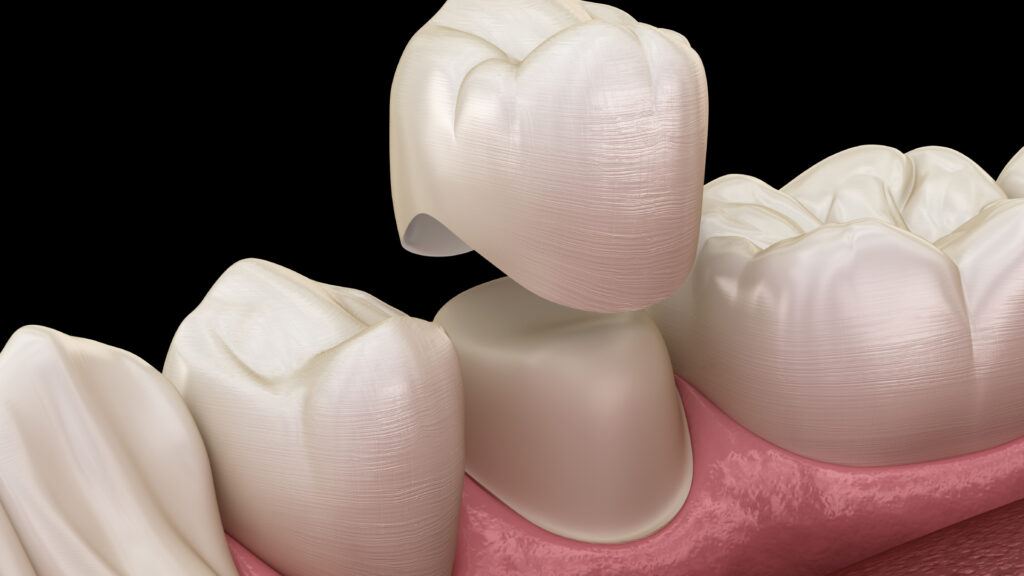
A damaged tooth doesn’t always need to be removed. Modern restorative dentistry offers several ways to preserve natural teeth, and the right treatment largely depends on how much healthy tooth structure remains.
Small cavities and minor damage can often be repaired with fillings. When a tooth has lost significant strength, however, a filling may not provide enough support. That’s where dental crowns can become an important treatment option.
Understanding why crowns are used, how they differ from fillings, and what treatment involves can help you make a more informed decision if your dentist recommends one.
What Is a Dental Crown?
A dental crown is a custom restoration designed to cover the visible portion of a tooth. It restores the tooth’s shape and function while protecting weakened natural structure underneath.
Unlike a filling, which repairs a specific section of a tooth, a crown provides broader coverage.
Crowns can be made from different dental materials. The appropriate choice depends on factors such as the tooth’s location, chewing forces, appearance, and individual treatment needs.
Why Would a Tooth Need a Crown?
Dentists may recommend crowns for several restorative reasons.
A Large Cavity
Small and moderate areas of decay can often be repaired with fillings. If decay has removed a significant amount of healthy tooth structure, there may not be enough strength remaining to reliably support a large filling.
A crown can provide additional coverage and protection.
A Cracked or Fractured Tooth
Teeth can crack from accidents, grinding, biting hard objects, or years of normal chewing.
Treatment depends on the type and depth of the crack. When a damaged tooth remains restorable but needs additional structural protection, a crown may be considered.
A Large Existing Filling
Older teeth sometimes contain fillings that occupy a considerable portion of the natural tooth.
As surrounding tooth structure weakens or fractures, replacing the restoration with another filling isn’t always the most appropriate solution. A crown may provide greater support.
After Root Canal Treatment
During root canal treatment, infected or inflamed tissue is removed from inside the tooth.
Depending on the location and condition of the treated tooth, a crown may subsequently be recommended to restore function and protect the remaining structure from fracture.
A Severely Worn Tooth
Grinding, clenching, bite problems, and long-term wear can gradually reduce tooth structure.
When wear becomes significant, restorative treatment may be necessary to rebuild the tooth and restore comfortable function.
Dental Crown vs Filling: What’s the Difference?
Both treatments restore damaged teeth, but they aren’t interchangeable.
A filling replaces a relatively localized area that has been damaged by decay or minor fracture. Healthy tooth structure remains around the restoration.
A tooth crown, by comparison, covers much more of the visible tooth and is generally considered when additional structural support is required.
The decision isn’t based simply on which treatment a patient prefers. Your dentist considers factors such as:
- Amount of healthy tooth remaining
- Size and location of damage
- Condition of existing restorations
- Presence of cracks
- Chewing forces
- Overall health of the tooth
Preserving healthy natural tooth structure remains an important consideration when planning restorative treatment.
What Happens When You Get a Dental Crown?
Treatment usually begins with an examination. Dental X-rays may be taken when necessary to evaluate areas that aren’t visible during the clinical examination.
If a crown is appropriate, the damaged tooth is prepared so the restoration can fit securely over it.
An impression or digital scan is then used to record the shape of the prepared tooth and surrounding teeth. This information helps create a crown that fits comfortably within your bite.
Depending on the treatment process, a temporary crown may protect the tooth while the final restoration is being prepared.
Once the permanent crown is ready, your dentist checks its fit, bite, and appearance before securing it in place.
How Long Do Dental Crowns Last?
There isn’t a fixed lifespan that applies to every crown.
Longevity depends on several factors, including:
- Oral hygiene
- Location of the crown
- Chewing habits
- Teeth grinding or clenching
- Condition of the supporting tooth
- Regular dental care
Good maintenance can help extend the useful life of a restoration.
A crown can still develop problems around its margins if plaque accumulates, so having a crown doesn’t eliminate the need for brushing, flossing, and routine dental examinations.
How Should You Care for a Dental Crown?
Caring for a crowned tooth is similar to caring for your natural teeth.
Brush twice daily using fluoride toothpaste and clean between your teeth every day. Pay particular attention to the area where the crown meets the gumline.
Avoid using your teeth to open packaging or bite extremely hard objects.
If you grind or clench your teeth, discuss it with your dentist. Excessive forces can damage both natural teeth and dental restorations.
Regular examinations also allow your dentist to check the crown, surrounding gums, and supporting tooth.
What Happens If You Delay Treatment for a Damaged Tooth?
A weakened tooth doesn’t become stronger by itself.
Continued chewing can sometimes cause cracks or fractures to progress. Decay may also spread deeper into the tooth if left untreated.
Depending on the condition, delaying damaged tooth treatment can result in:
- Increased sensitivity
- Pain while chewing
- Additional loss of tooth structure
- Infection
- More extensive treatment
- Loss of a tooth that may previously have been restorable
This doesn’t mean every damaged tooth automatically needs a crown. It means that having the tooth assessed early can preserve more treatment options.
Can Every Damaged Tooth Be Restored With a Crown?
No.
A crown requires sufficient healthy tooth structure and appropriate support. If decay or a fracture extends too deeply, or the surrounding bone and gums cannot adequately support the tooth, another treatment may be necessary.
In some situations, root canal treatment may be required before restoration. In others, a severely damaged tooth may need extraction.
A dental examination is necessary to determine whether a crown offers a predictable treatment option.
The Role of Crowns in Restorative Dentistry
The purpose of restorative dentistry isn’t simply to make a damaged tooth look better. Treatment should restore function while preserving natural teeth whenever reasonably possible.
Dental crowns can play an important role when a tooth requires more protection than a conventional filling can provide.
For patients looking for information about dental crowns in Napanee, Smile Shapers Napanee provides restorative dental services based on individual oral health needs. A clinical assessment can determine how much healthy tooth structure remains and whether a filling, crown, or another treatment is appropriate.
Protecting a Damaged Tooth Starts With the Right Diagnosis
A large cavity, broken filling, or cracked tooth doesn’t automatically mean you need a crown. At the same time, repeatedly repairing a significantly weakened tooth with fillings may not always provide the structural support it needs.
The right solution depends on the condition of the individual tooth.
If you notice a cracked tooth, damaged filling, sensitivity, or discomfort while chewing, have it evaluated rather than waiting for the problem to become painful. Early diagnosis gives your dentist the opportunity to recommend an appropriate restorative treatment and, whenever possible, preserve your natural tooth.