Battery research depends on more than selecting the right materials. How powders are prepared, compacted, and tested can also affect the quality of research samples. Ampcera supports advanced battery development through materials and services for solid-state battery research, including sulfide solid electrolytes, coated cathode materials, dry electrode processing, and electrolyte film services. Powder compaction is another important process that researchers may consider when preparing materials for further testing.
What Is Cold Isostatic Pressing?
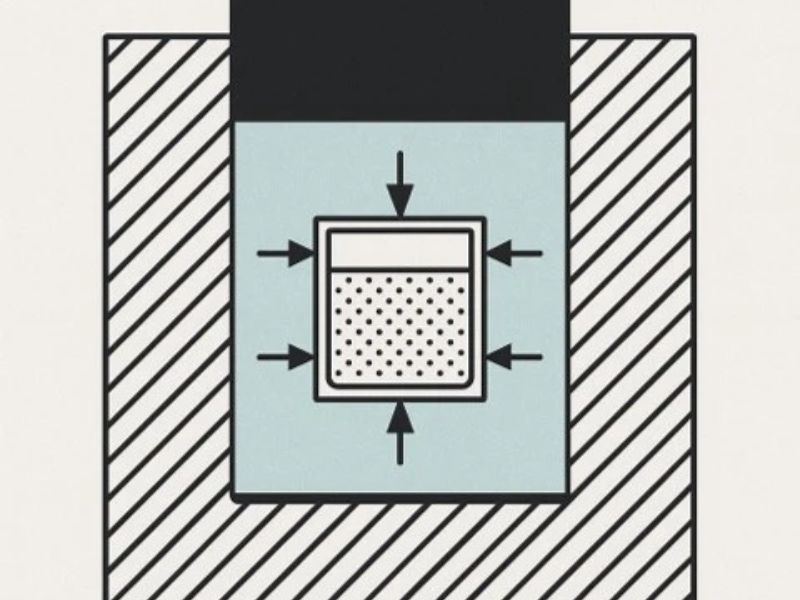
Cold isostatic pressing is a powder compaction method that applies pressure around a material from multiple directions. In a typical process, powder is placed inside a flexible mold, sealed, and surrounded by a pressurized liquid. The pressure acts across the mold surface, helping compact the powder into a shaped body. This compact is often called a green body because it may require additional processing, such as sintering, before reaching its final properties. A Cold Isostatic Press can be useful when researchers need more uniform compaction than a method that applies force mainly from one direction.
The final result depends on the material, mold, pressure, processing time, and handling conditions. Therefore, careful testing remains important when selecting this technique.
Why Is Powder Compaction Important?
Powder compaction helps transform loose materials into shapes that are easier to handle, evaluate, or process further. In battery research, this may be useful when preparing selected electrolyte powders, electrode preforms, and other advanced material components.
Uniform compaction can help reduce significant density differences within a sample. This may make it easier for researchers to compare samples and study the influence of processing conditions.
Common research applications include:
- Preparing powder-based test samples
- Compacting suitable electrolyte materials
- Forming cathode and anode preforms
- Studying the effects of pressure on material structure
- Preparing components for further processing
- Evaluating powder behavior under controlled conditions
A Cold Isostatic Press is one possible option for these applications, but it does not guarantee a particular battery performance result. Its suitability depends on the material and the purpose of the experiment.
Key Benefits of Isostatic Pressing
The main benefit of isostatic pressing is that pressure acts around the flexible mold instead of being applied mainly along one axis. Depending on the material and process settings, this can support more consistent density throughout a compact.
Other potential benefits include:
- Shape flexibility: Flexible molds can accommodate different component shapes.
- More uniform compaction: Pressure from multiple directions may reduce certain density variations.
- Material versatility: The method is used with suitable ceramic, metal, and advanced material powders.
- Preparation for later processing: Compacted bodies can undergo further steps when required by the application.
- Research flexibility: Different pressure conditions can be evaluated to understand their effects on material properties.
These benefits depend on the material and operating conditions. Researchers should inspect samples for cracks, dimensional changes, and density variations before using them in further experiments.
How Ampcera Supports Battery Development?
Ampcera provides materials and services for researchers and developers exploring solid-state batteries and next-generation energy storage. Its portfolio includes sulfide solid electrolytes, coated cathode materials, dry electrode processing, electrolyte film services, and battery research equipment.
These solutions support different stages of research, from material evaluation to electrode preparation and prototype studies. Researchers can investigate how material composition, processing methods, and component interfaces influence battery development.
For projects involving powder compaction, a Cold Isostatic Press may be relevant when the goal is to prepare a shaped powder body with controlled dimensions and suitable density. However, the process should be selected according to the powder’s properties, moisture sensitivity, and intended use.
Ampcera’s broader materials focus allows researchers to consider powder preparation alongside electrode processing and other battery development activities.
What Should Researchers Consider Before Using CIP?
Selecting a compaction method requires attention to the material, equipment, and expected results.
Material and Mold Compatibility
Researchers should check whether the powder and mold are suitable for the required pressure and processing environment. Some battery materials are moisture-sensitive and may require controlled handling throughout preparation and compaction.
Pressure and Sample Requirements
The required pressure depends on the powder and the properties desired in the finished compact. Applying more pressure does not always produce a better result. Unsuitable conditions may damage a sample or make it difficult to remove from the mold.
Safety and Quality Checks
Operators should follow the equipment manufacturer’s instructions and applicable safety procedures. Samples should be inspected after pressing, and important process settings should be recorded for repeatability.
A Cold Isostatic Press should only be operated by trained personnel using equipment designed for the required pressure range.
Cold Isostatic Pressing Compared With Other Methods
Uniaxial pressing applies force mainly along one axis. It can be useful for simple shapes and established production processes, but friction and pressure distribution can influence density within a compact.
By comparison, a Cold Isostatic Press applies pressure around a flexible mold. This can be helpful when a project requires more uniform compaction or a shape that is difficult to produce with conventional pressing.
Hot isostatic pressing is different because it combines high pressure with elevated temperature. It is often used to densify components or reduce internal pores. Cold isostatic pressing generally takes place near room temperature and is commonly used to form a green body before any additional heat treatment.
The right method depends on the material, component shape, available equipment, cost, and intended application.
Frequently Asked Questions
What materials can be compacted using this method?
Suitable materials may include certain ceramics, metals, and advanced powders. The choice depends on the material’s characteristics, mold compatibility, and required processing conditions.
Does pressing complete the entire manufacturing process?
Not always. The compact may require additional steps, such as sintering, drying, or machining, depending on the material and final application.
Is a Cold Isostatic Press useful for battery research?
It can be useful when researchers need compacted powder samples or performs for further evaluation. Suitability depends on the material chemistry, moisture sensitivity, and experimental goals.
What should be checked after compaction?
Researchers may measure dimensions, mass, density, and visible defects. The exact checks should reflect the intended use of the sample.
Conclusion
Powder preparation is an important part of advanced materials research because it can influence how samples are handled, processed, and tested. A Cold Isostatic Press provides a method for applying pressure around a flexible mold to produce compacted powder bodies for further work. Its effectiveness depends on appropriate process settings, material compatibility, and careful quality checks.
Ampcera supports solid-state battery research through advanced materials and development services, including sulfide solid electrolytes, coated cathode materials, dry electrode processing, and electrolyte film services. By choosing suitable processing methods and recording results carefully, researchers can better understand material behavior and make informed decisions as they develop future energy storage technologies.