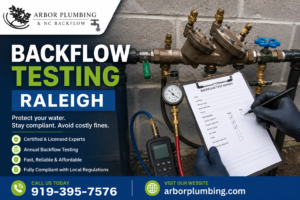
Clean water should flow in one direction: from the public water supply to your home or business. Backflow can disrupt that simple process and create a potential risk to the water system.
That is why regular backflow testing matters for properties with backflow prevention assemblies. Proper testing helps confirm that the assembly is working as intended and can also help property owners stay on top of applicable local requirements.
For property owners looking for Backflow Testing Chapel Hill NC or Backflow Testing Clayton, choosing a qualified professional is an important step toward keeping your plumbing system safe, functional, and properly maintained.
What Is Backflow?
Backflow happens when water or another substance moves in the opposite direction from normal water flow.
Normally, water travels from the drinking water system toward the point of use. Under certain conditions, however, pressure changes can cause water from a private plumbing system to move backward toward the potable water supply.
There are two common causes: backpressure and backsiphonage.
Backpressure can occur when pressure inside a private plumbing system becomes greater than the pressure in the public water supply. Backsiphonage can occur when the supply pressure drops and creates a siphoning effect.
Neither situation is something a property owner wants to discover after the fact.
Why Backflow Testing Matters
A backflow prevention assembly is designed to help prevent unwanted reverse flow. But like other mechanical plumbing components, it needs proper inspection and testing.
Testing checks whether the assembly performs according to its design and applicable requirements.
For commercial properties, this can be particularly important because plumbing systems may have more complex connections and potential cross-connections than a typical residential system.
The goal is straightforward: identify potential problems before they become bigger water-safety or compliance concerns.
And yes, testing a backflow device may not be the most exciting item on your maintenance calendar. But neither is discovering that something important stopped working six months ago.
Backflow Testing Chapel Hill NC
Property owners searching for Backflow Testing Chapel Hill NC should consider more than simply finding someone who can perform a test.
The person performing the work should understand backflow prevention equipment, testing procedures, and the requirements that apply to the property.
Chapel Hill properties can include residential buildings, commercial facilities, irrigation systems, and other plumbing arrangements where backflow protection may be required.
A professional backflow testing service can help determine whether the installed assembly is functioning properly and identify issues that may require attention.
Because requirements can vary depending on the water provider, property type, and plumbing setup, property owners should rely on current local requirements rather than assumptions or outdated information.
Backflow Testing Clayton
The same principle applies to Backflow Testing Clayton.
Backflow prevention requirements exist to help protect potable water systems from potential contamination caused by cross-connections. A properly maintained prevention assembly is one part of that protection.
Testing can help identify problems such as an assembly that does not operate correctly or equipment that needs repair or maintenance.
If you own or manage a property in Clayton, it makes sense to understand what type of backflow prevention device is installed and whether it requires periodic testing under applicable local requirements.
When in doubt, check with the appropriate local water authority or a qualified backflow professional rather than guessing.
What Happens During a Backflow Test?
A backflow test is more than simply looking at the device and saying, “Yep, it’s still there.”
A qualified tester uses appropriate testing equipment and procedures to evaluate the backflow prevention assembly.
The exact process depends on the type of assembly installed. Different devices have different internal components and testing requirements.
A typical service may involve:
- Identifying the backflow prevention assembly
- Inspecting the assembly and surrounding plumbing
- Using appropriate test equipment
- Checking the performance of the assembly
- Recording the test results
- Identifying any condition that requires repair or further attention
- Completing required documentation when applicable
Testing should follow the procedures and requirements applicable to the specific assembly and jurisdiction.
When Should Backflow Testing Be Done?
There is no single testing schedule that applies identically to every property everywhere.
Testing requirements can depend on the type of backflow prevention assembly, the property’s water connection, the local water provider, and applicable regulations.
That is why property owners should not rely on a generic online schedule without checking their local requirements.
If your water provider has notified you that testing is due, it is best to arrange the service promptly. Waiting until the deadline is close can create unnecessary stress.
A simple maintenance reminder can help prevent the classic plumbing problem: “I meant to take care of that.”
Who May Need Backflow Testing?
Backflow prevention can be relevant to many different types of properties and plumbing arrangements.
Examples may include:
- Commercial buildings
- Irrigation systems
- Restaurants and food-service facilities
- Industrial or manufacturing properties
- Multi-unit properties
- Facilities with specialized plumbing connections
- Properties with potential cross-connections
The need for testing depends on the specific plumbing configuration and applicable requirements.
A professional can help identify the installed assembly and explain what testing or maintenance may be appropriate.
Backflow Prevention and Cross-Connections
Backflow protection is closely connected to the concept of a cross-connection.
A cross-connection is a connection between a potable water system and another source or system that could potentially introduce unwanted substances into the drinking water supply.
For example, certain plumbing arrangements can create a pathway between potable water and irrigation, process water, chemicals, or other substances.
Backflow prevention assemblies help reduce this risk when properly selected, installed, maintained, and tested.
That is why backflow testing is not simply a paperwork exercise. The equipment has a real purpose within the overall protection of a potable water system.
What If a Backflow Assembly Fails the Test?
A failed test does not necessarily mean that the entire plumbing system needs to be replaced.
The next step depends on why the assembly failed and what condition the equipment is in.
The tester may identify a component that needs cleaning, adjustment, repair, or replacement. In some cases, additional work may be necessary before the assembly can successfully pass a subsequent test.
Property owners should avoid attempting complicated backflow repairs without the appropriate knowledge and equipment.
The safest approach is to have the assembly evaluated by a qualified professional and follow the applicable requirements for correction and retesting.
Why Professional Testing Is a Smart Choice
Backflow assemblies are not decorative plumbing fixtures. Their purpose is to provide protection within a water system.
Professional testing helps ensure that the correct equipment is evaluated using appropriate procedures.
It also gives property owners documentation that may be required by a water provider or local authority.
For businesses, keeping testing records organized can make routine compliance easier. It also provides a useful maintenance history if problems occur later.
Good plumbing maintenance is often about small, boring tasks that prevent much bigger headaches. Backflow testing fits that description perfectly.
Choosing Backflow Testing Services in Chapel Hill or Clayton
When comparing backflow testing services, look for a provider that understands the equipment involved and the requirements that apply to your property.
It is reasonable to ask:
- Is the tester qualified for the type of assembly installed?
- Will the test follow applicable procedures?
- Will the results be documented?
- Can the provider explain any problems found?
- Can they help with repair or follow-up when needed?
- Are they familiar with the requirements of the relevant local water authority?
Clear communication matters, especially when a property owner receives a testing notice and needs to understand what happens next.
Keep Your Backflow Testing on Schedule
Backflow prevention works best when property owners treat it as part of normal plumbing maintenance rather than something to think about only after receiving a notice.
If your property requires periodic testing, keep the due date with your other maintenance records.
For property owners searching for Backflow Testing Chapel Hill NC or Backflow Testing Clayton, professional testing can help confirm that the installed backflow prevention assembly is operating properly and help address problems when they are identified.
Arbor Plumbing & NC Backflow provides plumbing and backflow services for customers throughout its service area. If you need help understanding your backflow testing needs, visit Arbor Plumbing & NC Backflow to learn more about available services and request professional assistance.
Final Thoughts
Backflow protection is an important part of protecting potable water supplies.
Regular testing helps verify that a backflow prevention assembly is functioning as intended, while proper maintenance can help address problems before they become larger concerns.
Whether you need Backflow Testing Chapel Hill NC or Backflow Testing Clayton, the best approach is simple: understand your property’s requirements, use qualified professionals, keep your records organized, and don’t ignore testing notices.
Clean water deserves a plumbing system that takes its protection seriously.