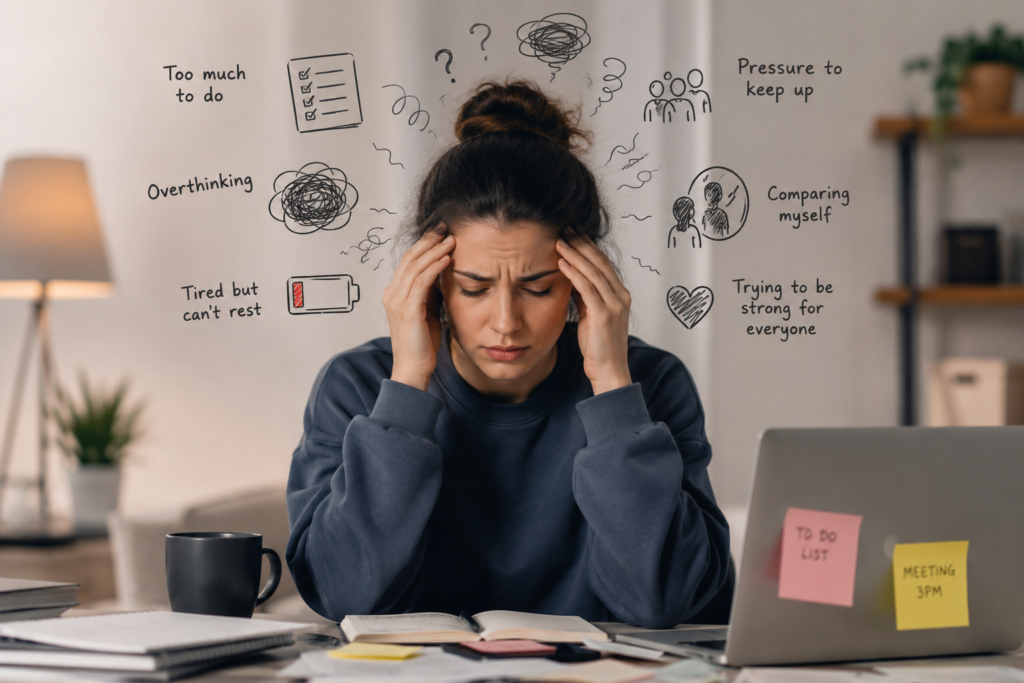
There are days when everything looks fine from the outside, yet you still feel like you cannot keep up. Nothing dramatic has happened. Work may be manageable, your relationships may seem stable, and there may not be a single obvious problem you can point to. Still, your mind feels crowded, simple decisions seem exhausting, and even small responsibilities can feel like too much.
This experience can be confusing because people often expect overwhelm to have a clear cause. When there is no obvious crisis, you may even question whether you have a right to feel this way.
But emotional overload does not always come from one major event. Sometimes it develops gradually as everyday demands, unresolved emotions, uncertainty, poor rest, and constant mental pressure accumulate. Understanding why this happens can make the experience less confusing and help you identify what you may need.
What Does Feeling Overwhelmed Actually Mean?
Feeling overwhelmed generally means that your perceived demands have become greater than your available emotional or mental resources for dealing with them.
That does not necessarily mean there is something seriously wrong. You can feel overwhelmed during an ordinary period of life simply because too many things require your attention at once.
For example, imagine balancing a full-time job, household responsibilities, messages from friends, financial decisions, appointments, and family expectations. None of these responsibilities may be overwhelming individually. Together, however, they can leave very little mental space for rest.
Overwhelm can also happen internally. You may spend hours thinking about conversations, future possibilities, mistakes, responsibilities, or decisions that nobody else can see. From the outside, your day may look relatively normal while your mind is working continuously in the background.
This is one reason emotional overload can be difficult to recognize. There does not always need to be a major external problem for someone to feel mentally exhausted.
Why Can Everyday Life Feel Like Too Much?
One common reason is cumulative stress.
Stress does not always arrive as one dramatic event. It can build through dozens of smaller pressures. A demanding week at work, poor sleep, an unresolved disagreement, financial uncertainty, and several unfinished tasks may gradually increase your emotional load.
You may continue functioning normally for a while. Then something relatively minor—such as an unanswered email or an unexpected change in plans—can suddenly feel much harder to handle.
That reaction does not necessarily mean the small event caused the problem. It may simply be the point at which your existing mental load became difficult to manage.
Another factor is the lack of recovery time. If every day involves work, responsibilities, social obligations, screens, notifications, and problem-solving, your mind may have few opportunities to genuinely reset.
Even activities that are supposed to be relaxing can sometimes keep your brain stimulated. Scrolling through social media, checking work messages, or constantly consuming information may give you a break from one task without giving your mind a meaningful break from demands.
The Hidden Mental Load Behind Overwhelm
Not everything that consumes mental energy appears on a to-do list.
You may be remembering a family member’s appointment, wondering whether a friend is upset with you, thinking about an upcoming deadline, deciding what needs to be purchased, worrying about money, and planning tomorrow—all while completing another task.
This is sometimes described as mental load: the ongoing effort involved in remembering, organizing, anticipating, and managing responsibilities.
A person can become overwhelmed even when their visible workload does not seem particularly large because much of the work is happening internally.
This can be especially relevant for parents, caregivers, working professionals, students, and people responsible for coordinating household or family needs.
The constant feeling that something needs to be remembered or handled can make it difficult to fully relax.
Signs That You May Be Mentally Overloaded
Overwhelm does not look identical for everyone. Some people become restless and irritable, while others withdraw or become unusually quiet.
Possible signs include:
- Difficulty concentrating on simple tasks
- Constantly thinking about what needs to be done
- Feeling mentally exhausted despite having accomplished little
- Becoming irritated by small inconveniences
- Having trouble making ordinary decisions
- Procrastinating because a task feels too large to begin
- Feeling emotionally sensitive or easily frustrated
- Wanting to withdraw from conversations or social activities
- Finding it difficult to relax even when you have free time
- Experiencing changes in sleep or daily routines
- Feeling as though your mind is constantly “on”
You may also notice a cycle of avoidance. When there are too many things to handle, you might avoid one task to get temporary relief. Unfortunately, the unfinished task can then remain in the background and contribute to more stress later.
That does not make you lazy or irresponsible. Avoidance can sometimes be a response to feeling overloaded rather than a lack of motivation.
Anxiety Can Make Ordinary Problems Feel Bigger
For some people, anxiety can intensify feelings of overwhelm.
An anxious mind may continuously scan for potential problems: What if something goes wrong? What if I forget something? What if someone is disappointed? What if I make the wrong decision?
This constant anticipation can consume significant mental energy.
Even when nothing is currently going wrong, your brain may be preparing for several possible problems at once. As a result, ordinary uncertainty can feel difficult to tolerate.
Anxiety can also create a tendency toward overthinking. A relatively simple decision may turn into an extended mental debate because you are trying to predict every possible outcome.
This does not mean that feeling overwhelmed automatically indicates an anxiety disorder. Occasional worry is a normal part of life. However, persistent anxiety that interferes with daily functioning may deserve professional attention.
Perfectionism and Unrealistic Expectations Can Add Pressure
Sometimes the source of overwhelm is not simply how much you have to do but the standard you believe you must meet.
If you expect yourself to perform exceptionally at work, maintain perfect relationships, stay physically healthy, keep your home organized, respond immediately to messages, and always remain emotionally available, ordinary life can become exhausting.
Perfectionism can make unfinished tasks feel like personal failures.
You may also struggle to recognize when something is “good enough.” Instead of completing a task and moving on, you continue refining it, checking it, or worrying about whether you did it correctly.
Over time, this can create a situation where even positive responsibilities become emotionally demanding.
Learning to distinguish between high standards and impossible standards can be an important part of reducing unnecessary pressure.
How Poor Sleep and Constant Stimulation Can Affect Overwhelm
Sleep and emotional well-being are closely connected.
When you are not getting adequate or restorative sleep, everyday challenges may feel harder to manage. Concentration can become more difficult, patience may decrease, and your ability to regulate emotional responses may be affected.
At the same time, feeling overwhelmed can make it harder to sleep. You may lie awake thinking about unfinished tasks or tomorrow’s responsibilities.
This creates a frustrating cycle: poor sleep makes daily demands feel harder, while daily stress makes quality rest more difficult.
Constant stimulation can add another layer. Frequent notifications, social media, work messages, and an endless stream of information can make it difficult to experience periods of genuine mental quiet.
Creating boundaries around technology, particularly before sleep or during designated periods of rest, may help reduce some unnecessary stimulation.
What Can You Do When Everything Feels Like Too Much?
The goal is not to solve your entire life in one afternoon. When you are overwhelmed, trying to fix everything simultaneously can create even more pressure.
Instead, start by reducing the number of things demanding your immediate attention.
Separate Urgent From Important
Write down what is occupying your mind.
Then divide those items into categories such as:
- Needs attention today
- Can wait until later
- Can be delegated
- Is outside my control
This simple exercise can turn an indistinct feeling of chaos into a clearer list of actual problems.
Choose One Small Action
When everything feels equally important, choosing where to begin can be difficult.
Select one manageable task and complete that before moving to the next. The goal is not maximum productivity. It is to reduce the feeling that everything is happening at once.
A small action—sending one email, making one appointment, preparing one meal, or organizing one part of a room—can create a sense of progress without requiring you to solve everything immediately.
Create Real Recovery Time
Rest should not always be treated as a reward for finishing everything.
If your responsibilities are endless, waiting until everything is completed before resting may mean you never actually recover.
Make room for activities that genuinely help you feel restored. Depending on the person, that might include walking, reading, spending time with someone supportive, exercising, being outdoors, practicing relaxation techniques, or simply having uninterrupted quiet time.
Reduce Unnecessary Decisions
Decision fatigue can add to mental overload.
You do not need to optimize every small choice. Creating simple routines for meals, clothing, errands, or recurring tasks can reduce the number of decisions you have to make each day.
The objective is not to make life rigid. It is to preserve mental energy for decisions that actually matter.
Talk About What Is Happening
Overwhelm can become heavier when you feel that you have to manage everything privately.
Talking with someone you trust can provide emotional support and sometimes reveal patterns that are difficult to see alone.
If the feeling continues or begins interfering with your everyday life, a qualified mental health professional can also help you explore what may be contributing to it and develop strategies that fit your circumstances.
When Feeling Overwhelmed May Need More Attention
Occasional overwhelm is part of normal life. It becomes more concerning when it is persistent, increasingly difficult to manage, or significantly affects your ability to function.
Consider seeking professional support if you regularly struggle with work, school, relationships, sleep, or basic responsibilities because you feel unable to cope.
It is also worth discussing persistent symptoms with a professional if overwhelm occurs alongside ongoing sadness, loss of interest in activities, severe anxiety, significant changes in sleep or appetite, feelings of hopelessness, or other noticeable changes in your mental health.
A mental health professional can help distinguish ordinary periods of stress from concerns that may benefit from more structured support. You do not need to wait until your situation becomes a crisis before asking for help.
Frequently Asked Questions
Why do I feel overwhelmed when everything is fine?
Your emotional response does not always correspond to one obvious external problem. Cumulative stress, mental load, poor sleep, anxiety, unresolved emotions, and ongoing responsibilities can contribute to feeling overwhelmed even when life appears relatively stable.
Is feeling overwhelmed a sign of anxiety?
It can be associated with anxiety, particularly when worry, overthinking, or constant anticipation of problems is involved. However, feeling overwhelmed by itself does not mean that someone has an anxiety disorder.
How can I stop feeling overwhelmed quickly?
Start by reducing the number of demands competing for your attention. Identify what genuinely needs attention now, choose one manageable task, and give yourself a short period without additional stimulation or unnecessary decisions.
Why do small problems feel so big when I am overwhelmed?
When your mental resources are already stretched, a small additional demand can feel like the final burden. The reaction may reflect accumulated stress rather than the importance of that particular problem.
Can lack of sleep make me feel overwhelmed?
Yes. Poor or insufficient sleep can make concentration, emotional regulation, and everyday coping more difficult. At the same time, stress and worry can interfere with sleep, creating a cycle that may be difficult to break without addressing both sides.
Should I talk to a therapist if I constantly feel overwhelmed?
If feeling overwhelmed is persistent, affects your daily functioning, or is accompanied by significant changes in mood, sleep, relationships, or behavior, speaking with a qualified therapist or mental health professional may be helpful. Professional support can provide a structured opportunity to understand what is contributing to the problem and identify appropriate coping strategies.
Conclusion
Feeling overwhelmed does not require a major crisis. Sometimes it develops quietly through accumulated responsibilities, constant mental demands, anxiety, poor recovery, unrealistic expectations, or simply having too much to manage for too long.
The important thing is not to judge yourself for having the reaction. Instead, pay attention to what your mind and body may be telling you.
You may not be able to remove every responsibility from your life, but you can begin separating urgent problems from unnecessary pressure, creating meaningful recovery time, reducing mental clutter, and asking for support when you need it.
And if feeling overwhelmed becomes persistent or starts interfering with the way you work, sleep, connect with others, or manage everyday life, reaching out to a qualified mental health professional can be a constructive next step.