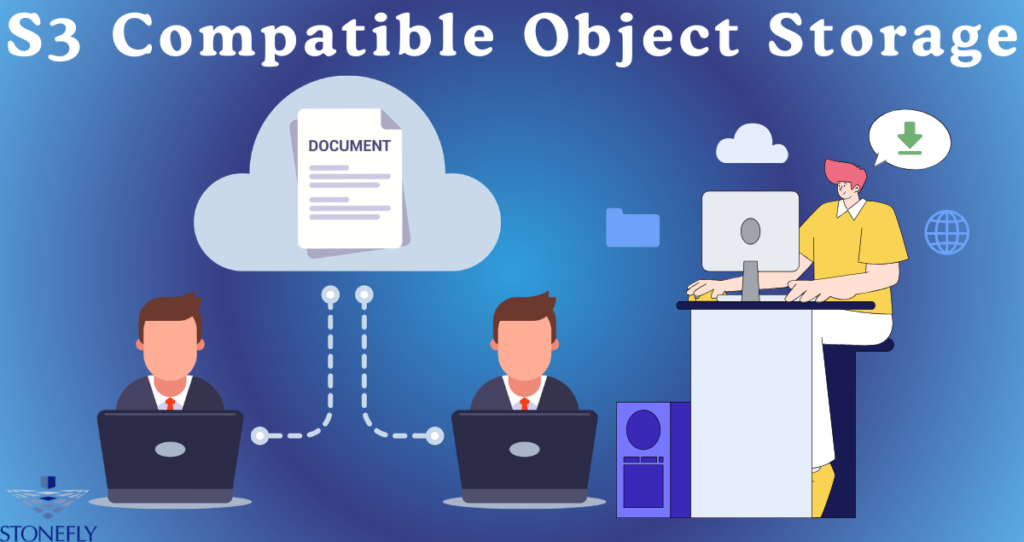
Powering Modern Applications with API-Driven Storage Architecture
Businesses today rely on applications that demand scalable, flexible, and highly accessible storage. From backup platforms to analytics engines and DevOps pipelines, modern software is built around APIs rather than traditional file systems.
As data volumes increase, organizations require infrastructure that integrates smoothly with cloud-native tools while remaining under their control. This is where S3 Compatible Object Storage becomes a strategic advantage.
Understanding API-Based Object Storage
Object storage differs from traditional block and file storage. Instead of dividing data into blocks or placing it in hierarchical folders, object storage keeps each file as a complete unit with associated metadata and a unique identifier.
API-driven communication allows applications to interact directly with storage systems using HTTP-based requests. This simplifies integration and automation.
S3 Compatible Object Storage follows the widely adopted S3 API standard, allowing applications built for S3 environments to connect without modification.
Why Compatibility Matters
Application ecosystems have evolved around S3 APIs. Backup software, analytics platforms, AI frameworks, and cloud-native applications frequently use S3 commands to store and retrieve data.
Without compatibility, organizations would need to rewrite applications or implement complex gateways.
S3 Compatible Object Storage eliminates that barrier by supporting the same command structure and authentication methods used by S3-based tools.
This ensures seamless deployment without operational disruption.
Core Benefits for Enterprises
Application Flexibility
When infrastructure supports standard APIs, organizations avoid vendor lock-in.
S3 Compatible Object Storage allows Businesses to:
- Migrate workloads easily
- Deploy hybrid environments
- Integrate third-party software
- Transition between cloud and on-premise systems
This flexibility protects long-term IT strategy.
Scalability for Growing Data
Object storage systems scale horizontally. Instead of replacing hardware, administrators add nodes to increase capacity.
As data expands from terabytes to petabytes, S3 Compatible Object Storage maintains performance without architectural redesign.
This approach supports continuous growth without downtime.
Cost Control
Public cloud storage often includes recurring charges and data transfer fees. On-premise S3-compatible systems provide predictable cost structures.
Organizations invest in hardware upfront and scale incrementally.
Over time, S3 Compatible Object Storage reduces dependency on unpredictable monthly billing cycles.
Enhanced Metadata Management
Object storage allows custom metadata tagging. This improves searchability and automation.
Analytics teams use metadata for dataset classification, while compliance teams use it for retention management.
S3 Compatible Object Storage supports metadata-rich environments that improve operational efficiency.
Security Features That Protect Data
Enterprise storage must prioritize security.
Most S3-compatible systems include:
- Encryption at rest
- Encryption in transit
- Role-based access control
- Access keys and authentication policies
- Object immutability
Immutability prevents objects from being modified or deleted within a defined retention period. This protects against ransomware attacks.
With S3 Compatible Object Storage, organizations combine API convenience with enterprise-grade protection.
Common Use Cases
Backup and Disaster Recovery
Backup vendors widely support S3 APIs. This makes S3-compatible systems ideal as backup targets.
Organizations can isolate backups from production networks and enforce immutability policies.
S3 Compatible Object Storage ensures rapid restore operations while protecting backup integrity.
Big Data and Analytics
Analytics platforms require access to large datasets.
Object storage provides consistent throughput and horizontal scalability. Applications can retrieve data using familiar API calls without modification.
AI and Machine Learning
Training AI models demands massive data ingestion and retrieval.
By deploying S3 Compatible Object Storage close to compute resources, enterprises reduce latency and improve processing efficiency.
DevOps and Cloud-Native Workloads
Containers, microservices, and CI/CD pipelines often rely on S3 APIs for artifact storage.
Compatibility ensures development workflows operate without disruption, whether deployed in private data centers or hybrid infrastructures.
Hybrid Cloud Strategies
Many organizations adopt hybrid strategies to balance flexibility and control.
S3-compatible systems enable smooth data replication between on-premise infrastructure and public cloud platforms.
Since both environments support the same API structure, synchronization becomes straightforward.
S3 Compatible Object Storage allows enterprises to maintain local performance while retaining cloud interoperability.
Comparing Object Storage with Traditional Storage
Traditional SAN and NAS systems work well for structured workloads but struggle with massive unstructured datasets.
Object storage eliminates file system limitations and scales efficiently.
With S3 Compatible Object Storage, applications communicate directly through APIs instead of mounting file shares.
This design simplifies automation and improves scalability.
Deployment Considerations
Before implementation, organizations should assess:
- Current storage usage
- Future growth projections
- Network bandwidth
- Compliance requirements
- Application integration needs
A well-planned deployment ensures optimal performance and long-term scalability.
S3 Compatible Object Storage performs best when paired with high-speed networking and proper redundancy configuration.
Performance Optimization Tips
To maintain stable performance:
- Use SSD or NVMe caching layers
- Monitor object request patterns
- Separate backup traffic from production workloads
- Implement load balancing
These steps ensure consistent throughput even during peak demand.
Future of API-Driven Storage
Digital transformation continues accelerating. IoT devices generate constant data streams. AI workloads demand high-capacity storage. Enterprises need infrastructure that integrates seamlessly with modern software ecosystems.
API-driven object storage has become foundational for this transformation.
S3 Compatible Object Storage offers a practical approach by combining scalability, interoperability, and cost control within a single architecture.
Organizations that adopt API-aligned storage systems position themselves for long-term flexibility and innovation.
Conclusion
Modern applications rely on APIs. Storage infrastructure must align with that reality.
Traditional file systems limit scalability and integration. Object storage removes those constraints and supports massive unstructured datasets.
S3 Compatible Object Storage bridges the gap between cloud-native software and enterprise-controlled infrastructure. It delivers scalability, predictable costs, security, and seamless application integration.
As businesses continue expanding digital operations, adopting API-compatible storage ensures smoother growth, stronger resilience, and greater operational efficiency.
FAQs
1. What does S3 compatibility mean in object storage?
It means the storage system supports the same API commands used by S3-based applications, allowing seamless integration.
2. Can S3-compatible storage be deployed on-premise?
Yes. Many solutions operate inside private data centers while maintaining API compatibility.
3. Is object storage suitable for databases?
Object storage works best for unstructured data. Structured databases typically perform better on block storage systems.
4. How does S3-compatible storage improve backup security?
It supports immutability and access control policies that protect backups from modification or deletion.
5. Can it integrate with hybrid cloud environments?
Yes. API compatibility allows smooth data replication between local and cloud environments.