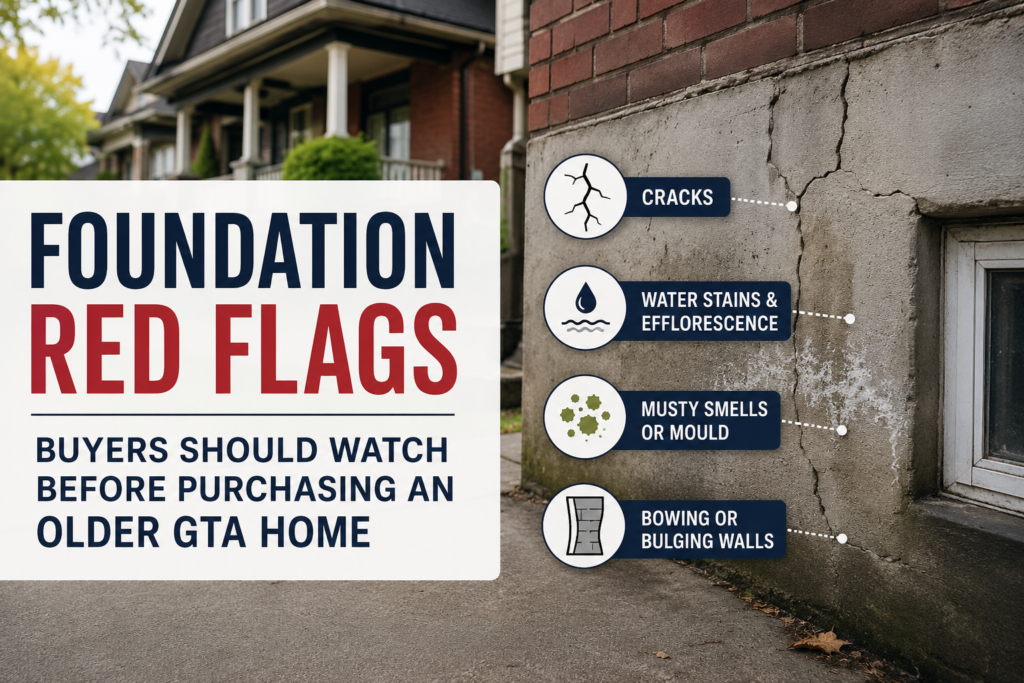
Buying an older home in the Greater Toronto Area can feel like a rare opportunity. Many of these houses sit in mature neighbourhoods, offer larger lots, and carry the kind of character newer builds often lack. From Toronto’s century homes to post-war properties in Mississauga, Etobicoke, Oakville, Burlington, and Hamilton, older GTA homes attract buyers who want location, charm, and long-term value.
But beneath the curb appeal, foundation problems can quietly turn a promising purchase into a costly repair project.
A fresh coat of paint, staged furniture, and updated flooring can make a basement look move-in ready. What buyers need to remember is that foundation issues are not always obvious during a short showing. Water stains may be covered. Cracks may be hidden behind drywall. Musty smells may be masked by air fresheners. Drainage problems may only appear after heavy rain or spring thaw.
That is why buyers should pay close attention to foundation red flags before making a firm offer on an older GTA home. A home inspection is important, but buyers also need to know what signs deserve extra caution.
Why Older GTA Homes Need a Closer Foundation Review
Older homes across the GTA were often built under different construction standards than modern homes. Some have block foundations, rubble stone foundations, poured concrete walls, or aging waterproofing systems that have already passed their expected service life. In many cases, original drainage systems may be clogged, damaged, missing, or no longer performing well.
The GTA also brings its own moisture challenges. Heavy rainfall, freeze-thaw cycles, clay-heavy soil in some areas, poor grading, and aging downspout systems can push water toward foundation walls. Over time, that pressure can lead to seepage, cracks, bowing walls, damp basements, mould concerns, and structural movement.
This does not mean buyers should avoid older homes. Many are solid investments when maintained properly. The real issue is knowing the difference between normal aging and warning signs that may point to deeper foundation trouble.
1. Horizontal or Stair-Step Foundation Cracks
Not every foundation crack means disaster, but some crack patterns deserve serious attention. Thin vertical cracks can occur as concrete settles or cures, but horizontal cracks, stair-step cracks in block walls, wide cracks, or cracks that appear to be growing may point to movement or pressure against the foundation.
In older GTA homes, stair-step cracking is often seen in block or masonry foundations. These cracks may follow mortar joints and indicate shifting, settlement, or lateral pressure from wet soil. Horizontal cracks can be even more concerning because they may suggest the wall is being pushed inward.
Buyers should look carefully at basement walls, exterior foundation walls, garage walls, and any exposed masonry. Fresh paint over a single wall section may also be worth questioning. It could be innocent maintenance, or it could be covering a previous crack or water stain.
If a crack is wider than a hairline, appears uneven, has moisture around it, or is paired with bowing, a foundation specialist should review it before the buyer commits.
2. Water Stains, Efflorescence, or Damp Basement Walls
Water leaves clues long before a basement floods. Buyers should watch for brown stains, white chalky residue, peeling paint, bubbling drywall, damp baseboards, or discoloured flooring near exterior walls.
That white powdery residue on concrete or block walls is called efflorescence. It appears when moisture passes through masonry and leaves mineral deposits behind. While it may not confirm an active leak on its own, it is a strong sign that water has moved through the wall at some point.
Older basements often get described as “a little damp” or “typical for the age.” Buyers should be careful with that explanation. A damp basement can mean poor exterior drainage, cracked foundation walls, failing waterproofing, clogged weeping tile, or hydrostatic pressure below the slab.
This is where a local waterproofing company can offer practical insight. For example, GTA homeowners often consult specialists such as GJ MacRae Foundation Repair when they need to understand whether dampness is caused by grading, foundation cracks, drainage failure, or exterior wall deterioration.
3. Musty Smells or Signs of Mould
A musty smell during a showing should never be ignored. It often signals long-term moisture, poor ventilation, or hidden water entry. In older homes, the smell may come from behind finished basement walls, under flooring, inside crawl spaces, around sump pits, or near stored belongings.
Buyers should be especially careful when a basement has been recently finished or renovated. New drywall and flooring can make the space look clean, but they can also conceal moisture problems. If the air feels humid, the basement smells earthy, or there are dehumidifiers running during a showing, buyers should ask why.
Mould is not only a cosmetic issue. It may indicate that water has been entering the basement repeatedly. In a real estate purchase, that matters because fixing the smell may require more than cleaning. It may require foundation crack repair, exterior waterproofing, sump pump work, drainage correction, or removal of damaged interior materials.
4. Bowing or Bulging Basement Walls
A bowed wall is one of the more serious foundation red flags. It can appear as a curve, bulge, inward lean, or wall section that no longer looks straight. This is often easier to spot by standing at one end of the wall and looking along its length.
Bowing can happen when soil outside the foundation becomes saturated and pushes against the wall. Freeze-thaw movement may add more stress. In block foundations, horizontal cracks may appear with the bowing. In poured concrete walls, buyers may see long cracks, offsets, or water seepage.
This is not a “wait and see” issue during a home purchase. A bowed wall may require structural foundation repair, reinforcement, waterproofing, excavation, or engineering review. Buyers should avoid relying only on seller explanations unless proper documentation, permits, and repair records are available.
5. Sloping Floors, Sticking Doors, or Uneven Window Frames
Foundation movement does not always show up first in the basement. Sometimes the signs appear upstairs. Sloping floors, doors that stick, windows that do not close properly, diagonal cracks above door frames, or gaps between trim and walls can all point to settlement or structural movement.
Older homes are not always perfectly level, and minor unevenness can be normal. The concern rises when several symptoms appear together. For example, a sloping floor combined with basement cracks and water stains should raise more concern than a slightly uneven floor in isolation.
Buyers should also look for quick cosmetic fixes. Fresh caulking around trim, new paint over wall cracks, or recently replaced basement panels may not be negative by themselves, but they should prompt better questions.
6. Poor Grading Around the House
The outside of the home often tells buyers more than the finished basement. Soil should slope away from the foundation so rainwater drains outward. If the ground slopes toward the home, water can collect beside foundation walls and increase pressure on aging waterproofing systems.
Buyers should walk the property after viewing the basement. Look at garden beds, walkways, driveways, patios, window wells, and side yards. In tight GTA lots, water may have limited space to drain. Shared driveways, raised neighbouring lots, and hardscaping can also send water toward the foundation.
Low soil near the wall, sunken patio slabs, pooling water marks, and mossy areas beside the foundation may all suggest drainage concerns. These issues may seem small, but they can drive long-term basement moisture.
7. Short Downspouts or Disconnected Eavestroughs
Roof water is one of the most common sources of foundation stress. A large roof sheds a significant amount of water during storms. If downspouts discharge beside the foundation, that water can soak the soil directly against basement walls.
Buyers should check whether downspouts are extended away from the house, whether eavestroughs are sagging or clogged, and whether water appears to be spilling over roof edges. In older homes, downspouts may also connect to outdated systems that no longer perform well.
Poor roof drainage does not always mean the foundation is damaged, but it increases risk. When combined with damp basement walls, cracks, or musty odours, it becomes a stronger warning sign.
8. Basement Finishes That Hide the Foundation
A fully finished basement can add value, but it can also limit visibility. Buyers may not be able to see foundation walls, floor-wall joints, support posts, or previous repair areas. This is especially important in older GTA homes where basement living space may have been added years after the original construction.
Buyers should ask when the basement was finished, whether permits were obtained, whether waterproofing was completed before finishing, and whether there has ever been water entry. They should also look inside utility rooms, closets, furnace rooms, cold rooms, and under stairs, since these areas often expose the original foundation.
A clean finished basement is reassuring only when the buyer can confirm what is behind the finishes.
9. Old or Missing Sump Pump Systems
Some older homes have no sump pump. Others have an aging pump, an uncovered pit, poor discharge lines, or no battery backup. In areas with high groundwater, poor drainage, or a history of basement seepage, a sump pump can be an important part of the home’s water management system.
Buyers should ask whether the pump works, where it discharges, how old it is, and whether it has backup protection. A sump pump that discharges too close to the foundation can recycle water back into the soil around the house.
A sump pump alone does not solve every foundation issue, but it can be part of a broader waterproofing system when installed correctly.
10. Evidence of Previous Foundation Repairs Without Documentation
Previous repair work is not automatically a bad sign. In fact, a properly completed foundation repair can make a home safer and more reliable. The issue is undocumented repairs.
Buyers should ask for invoices, warranty details, engineering reports, permits, photos, and contractor information. If the seller says “the leak was fixed years ago,” buyers should ask how it was fixed. Was it an interior patch, exterior excavation, crack injection, wall reinforcement, weeping tile replacement, or full foundation repair?
For larger concerns, buyers may want a foundation specialist to assess the repair history. Companies such as GJ MacRae Foundation Repair are often contacted by GTA homeowners for issues related to foundation repair in Toronto, basement cracks, exterior waterproofing, and structural wall concerns. A professional assessment can help buyers understand whether an older repair is holding up or whether more work may be needed.
What Buyers Should Ask Before Making an Offer
Before purchasing an older GTA home, buyers should ask direct questions about water and foundation history. Has the basement ever leaked? Were there any insurance claims? Has waterproofing been done? Is there a sump pump? Were foundation cracks repaired? Are there transferable warranties? Were permits required for structural work?
The answers matter. So does the seller’s ability to provide proof.
Buyers should also consider adding inspection conditions where possible. In a competitive market, some buyers feel pressured to waive conditions, but foundation problems can carry serious financial consequences. Even when an offer must move quickly, buyers can still bring an experienced inspector, review visible drainage, and request repair records before making a final decision.
Final Thoughts
An older GTA home can be a smart purchase, but the foundation deserves more than a quick glance. Cracks, moisture, odours, poor grading, bowing walls, sloping floors, and undocumented repairs can all point to risks that may affect cost, safety, and long-term value.
The best approach is not fear. It is careful review. Buyers who know what to look for can separate minor maintenance issues from serious foundation red flags. Before signing on an older home, take the time to inspect the basement, walk the exterior, ask for documentation, and bring in a qualified professional when warning signs appear.
A strong foundation protects more than the house. It protects the buyer’s investment.