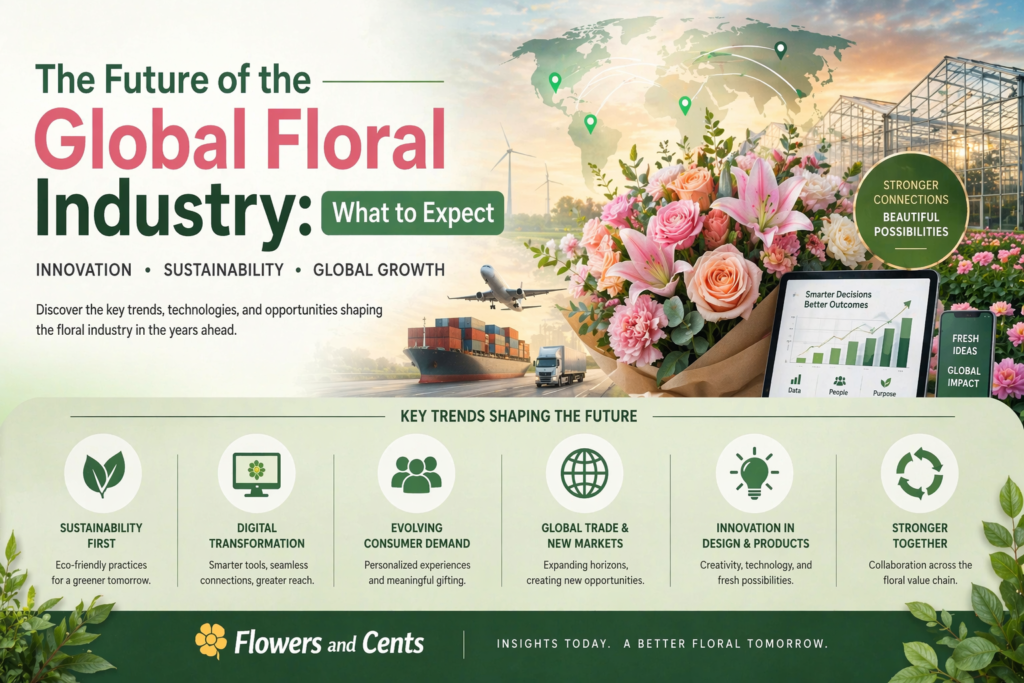
The global floral industry has always been rooted in tradition, beauty, and emotion. However, in recent years, it has undergone rapid transformation driven by technology, sustainability, shifting consumer behavior, and evolving supply chains. As we move further into a digitally connected and environmentally conscious world, the floral industry is poised for significant change.
For growers, wholesalers, retailers, and industry stakeholders, understanding what lies ahead is critical for staying competitive and resilient.
At Flowers and Cents, we explore the key trends and developments shaping the future of the global floral industry and what businesses can expect in the years to come.
Increasing Demand for Sustainability
Sustainability is no longer a niche concern it is becoming a central pillar of the floral industry. Consumers, especially younger generations, are increasingly aware of environmental impact and expect businesses to adopt responsible practices.
In the future, we can expect:
- Greater demand for locally sourced flowers
- Reduced reliance on floral foam and plastic packaging
- Growth in eco-friendly farming practices
- Transparent sourcing and supply chain accountability
Flower farms and suppliers that prioritize sustainability will gain a competitive edge, while those that fail to adapt may struggle to meet evolving expectations.
Digital Transformation Across the Industry
Technology is rapidly reshaping how floral businesses operate. From online ordering platforms to data-driven inventory management, digital tools are improving efficiency and accessibility.
Key digital trends include:
- B2B online marketplaces for wholesale flower trading
- Automation in order processing and logistics
- Data analytics for demand forecasting
- Digital marketing and e-commerce expansion
Retail florists and wholesalers who embrace digital transformation will be better equipped to scale operations and reach new markets.
Evolution of Consumer Preferences
Consumer behavior is shifting, and the floral industry is adapting accordingly. Today’s buyers are looking for more than just flowers—they want meaningful experiences.
Emerging preferences include:
- Personalized floral arrangements
- Subscription-based flower delivery services
- Experience-driven gifting (e.g., curated gift bundles)
- Unique and rare flower varieties
This shift is encouraging florists to move beyond traditional offerings and focus on creativity, customization, and storytelling.
Growth of Global Trade and New Markets
The floral industry has always been global, with flowers often traveling across continents before reaching consumers. This trend will continue, but with new dynamics.
Future developments may include:
- Expansion into emerging markets with rising demand
- Increased trade partnerships between countries
- Improved logistics and transportation networks
- Greater reliance on regional distribution hubs
While globalization opens new opportunities, it also requires businesses to navigate regulatory challenges and supply chain complexities.
Impact of Climate Change on Flower Production
Climate change is becoming a significant factor influencing flower farming. Changes in weather patterns, water availability, and temperature conditions are affecting crop yields and flower quality.
As a result, the industry may see:
- Shifts in flower-growing regions
- Increased investment in climate-resilient farming techniques
- Development of new flower varieties suited to changing conditions
- Greater emphasis on sustainable agriculture
Adaptability will be crucial for growers and suppliers facing environmental challenges.
Rise of Direct-to-Consumer Models
The traditional supply chain is evolving as more businesses adopt direct-to-consumer (DTC) models. Online platforms allow growers and wholesalers to connect directly with end customers, bypassing intermediaries.
This trend offers:
- Higher margins for producers
- More competitive pricing for consumers
- Increased transparency in sourcing
However, it also introduces new competition for traditional retail florists, who must differentiate themselves through service, design, and customer experience.
Innovation in Floral Design and Products
Creativity will continue to play a major role in the future of floristry. Designers are experimenting with new styles, materials, and concepts to meet changing consumer tastes.
We can expect to see:
- Integration of dried and preserved flowers
- Use of unconventional materials in arrangements
- Minimalist and modern design trends
- Cross-industry collaborations with fashion and interior design
Innovation will be key to capturing attention and staying relevant in a competitive market.
Importance of Strong Supply Chain Management
As the floral industry grows more complex, efficient supply chain management will become even more critical.
Future priorities include:
- Reducing transit times to maintain freshness
- Enhancing cold chain logistics
- Improving coordination between growers, wholesalers, and retailers
- Minimizing waste and optimizing inventory
Businesses that invest in streamlined supply chains will be better positioned to deliver consistent quality and meet customer expectations.
Data-Driven Decision Making
Data is becoming a powerful tool in the floral industry. From tracking sales trends to predicting demand, data-driven insights can significantly improve business performance.
Companies are increasingly using data to:
- Identify best-selling products
- Optimize pricing strategies
- Forecast seasonal demand
- Improve customer targeting
This shift toward analytics will enable smarter, more strategic decision-making across the industry.
The future of the global floral industry is dynamic, innovative, and full of opportunity. While challenges such as climate change and supply chain disruptions remain, they are balanced by advancements in technology, sustainability, and evolving consumer demand.
For businesses across the floral ecosystem, success will depend on the ability to adapt, innovate, and stay informed.
At Flowers and Cents, we are committed to providing insights, trends, and industry knowledge that help floral professionals navigate this evolving landscape and build a stronger future.