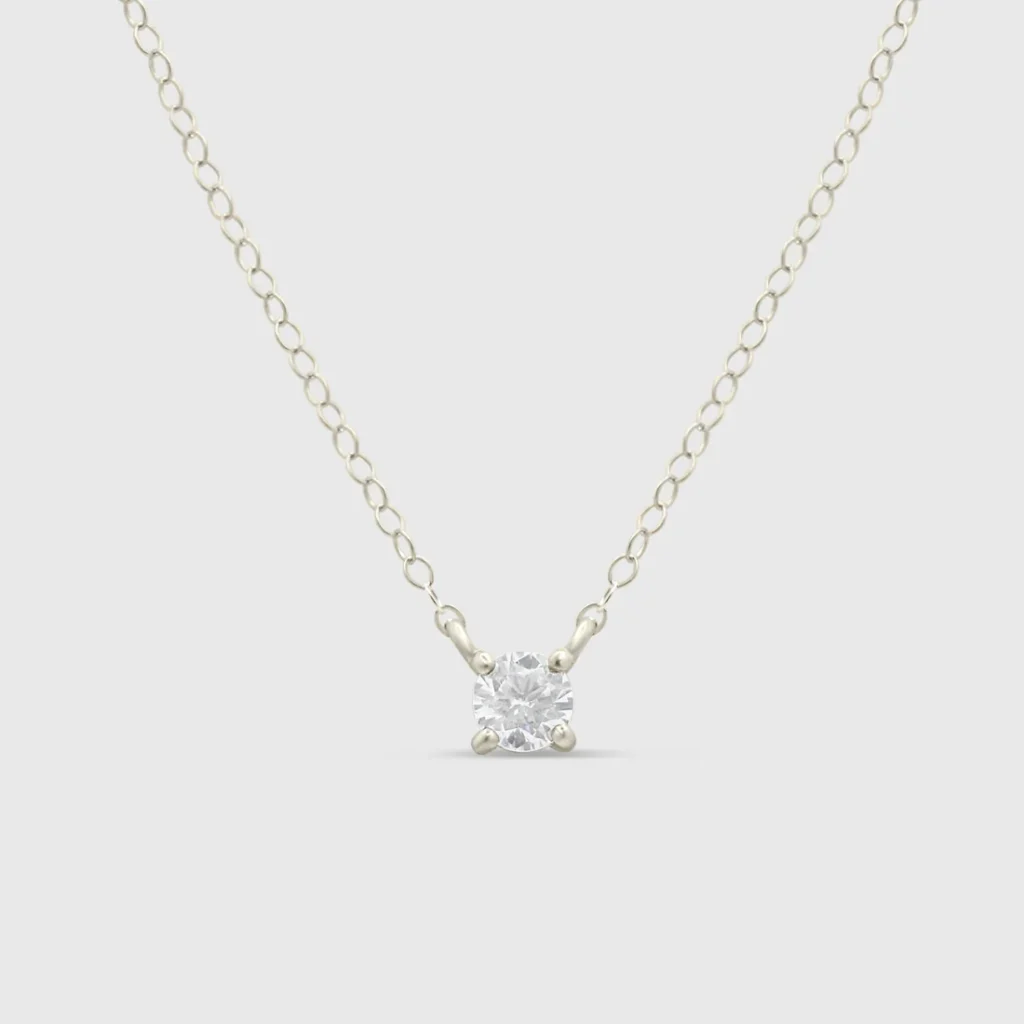
Saying goodbye is a very personal thing, and it is often the most deeply human one. Traditionally, grieving has focused on a memorial at a designated location; however, nowadays, there is an extremely emotional and spiritual way for people to stay physically connected with the dead. Ash diamonds jewelry is the latest product of memorial technology. Besides giving the ashes of the departed new life, it also creates a stunning, sparkling gem from them.
Actually, cremation jewelry via carbon synthesis is not merely a beautiful symbolic tribute; it is a marvelous scientific breakthrough. Those families who receive such a one-of-a-kind and amazing memento of their dear ones are certain to be profoundly and eternally touched.
The Alchemy of Memory: How Science Turns Ashes Into Diamonds
If you want to know how ash diamonds jewelry is made, the first thing you need to know is what the human body is made of. Our beings are made of life carbon, and diamonds are the purest crystallized form of carbon. Scientists do an amazing job here by extracting carbon from cremated ashes, which is then used to “grow” a diamond chemically identical to a naturally occurring one.
1. Carbon Extraction and Purification
The first step is to slowly and gently extract carbon from ashes or hair. A laboratory with advanced equipment takes the remains through a process in which they are heated to a very high temperature, but without oxygen.
After the halogen purification experiment, scientists obtain substances free of impurities and continue to convert these compounds into high-purity graphite. This graphite is then used as a source material in the carbon-to-diamond process.
2. Mimicking nature’s forge inside the Earth
Under the heat and pressure of the mantle, Nature has a diamond factory that takes millions of years to produce a single diamond. Therefore, scientists have to use High Pressure High Temperature (HPHT) technology to create cremation jewelry within a human lifetime.
For diamond growth, a purified graphite sample with a diamond “seed” is placed in a growth cell. This cell is then put into a big press that gives carbon:
- Temperatures: More than 2,500 degrees Fahrenheit.
- Pressure: Almost 800,000 pounds per square inch.
During this process, carbon atoms break their old structure and come together where the seed is used, diamond layers crystallize by layer around the seed, after several months into a gem-quality rough diamond.
3. The Art of the Cut
After the raw diamond is extracted from the HPHT press, it undergoes the same extensive process as any natural stone. Master gem cutters first evaluate the rough crystal to achieve the best yield and brilliance. The shape can be a timeless Round Brilliant, a trendy Princess, or a romantic Heart, which can be diamond-shaped. The stone is then faceted to bring out its “fire,” the beautiful effect of light refracting into different colors.
Why Choose Ash Diamonds Jewelry?
The decision to choose a memorial is highly personal. Nonetheless, the surge in the popularity of cremation jewelry is basically due to a handful of persuasive reasons:
A Living Legacy
Usually, urns are immobile objects kept in one place. However, ash diamond jewelry is portable. It gives the wearer the opportunity to bring their loved one along to major events such as a wedding or graduation, and even on a quiet walk, thus offering a sense of their presence and a great source of comfort.
Unparalleled Durability
Diamonds have the highest hardness rating of 10 on the Mohs scale, being the most durable material on Earth. Memories stored in any other objects may tarnish, break or fade, but a memorial diamond is indestructible. It is part of history that can be handed down as a family heirloom to future generations.
Aesthetic Versatility
There is a big difference between memorial items of the past and ash diamond jewelry. While the former often have a sad look, the latter is not distinguishable from estate jewelry made of precious metals. A stone can be surrounded by 14k or 18k gold, platinum, or silver, which gives the wearer the freedom to pick a style that is right for them and keep it as a secret memorial if they want to.
The conversion of ashes to a diamond is not merely a scientific breakthrough; it is also a connection between our physical existence and the memories we hold dear. When choosing ash diamond jewelry, families are creating a memorial that is just as bright, lasting, and one-of-a-kind as the person it represents.
Frequently Asked Questions
1. Are ash diamonds genuine diamonds?
Ash diamonds are genuine diamonds to the same degree. It has been proven that chemically, physically, and optically, a diamond grown from ashes is just the same as a natural diamond. Both have the identical refractive index and hardness. Most reputable dealers have their stones certified by the best gemological laboratories.
2. How many ashes are required to make a cremation pendant?
Normally, a laboratory consumes about 100 grams of ashes or roughly 10 grams of hair to obtain enough carbon to produce one diamond. If a person’s ashes do not provide enough carbon, researchers can add carbon from other sources; however, the loved one’s carbon will still be the first within the crystal lattice structure.
3. Is it possible to pick the diamond’s color?
Generally, due to the presence of nitrogen or boron in the human body, most diamonds coming from ashes have a yellow or blue color by nature. On the other hand, highly skilled laboratories nowadays can produce colorless diamonds by eliminating these elements, or, through a special post-growth treatment, can give the diamonds a range of colors, from pink to green to red.
4. What is the time frame for the whole process?
Diamond formation is biologically and technically a very intricate process. The creation of a diamond from ashes is generally 4 to 9 months from the delivery of ashes to the setting of the final piece of jewelry. This time period includes growth, cutting, certification, and other processes.
5. Can pet diamonds be made?
For sure. As well as being a part of their lives, most pet owners also keep their pets in the category of “family members”, so transforming the remains of a faithful companion into a jewel is a source of solace for them. The same method of carbon extraction used for humans is also used for domestic animals, thus a glorious celebration of a “furry family member”.